1. Introduction
Choosing the right wall material is essential for ensuring fire safety, durability, and cost efficiency in modern construction. Among the most widely used options are magnesium oxide board (MGO board) and gypsum board, commonly known as drywall.
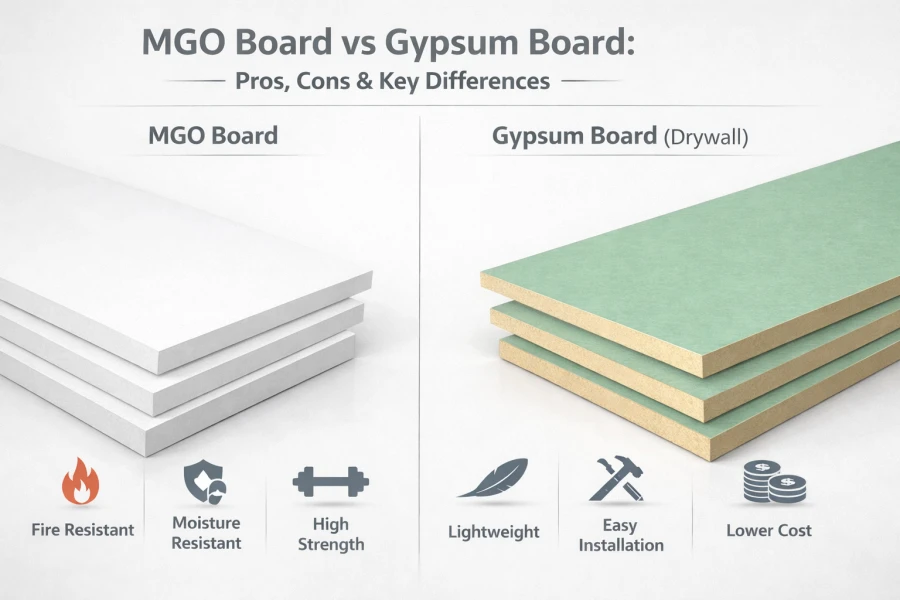
While drywall is essentially a type of gypsum board and remains popular for its low cost and easy installation, MGO board is gaining attention for its superior fire resistance, moisture performance, and strength. These differences can significantly impact the performance and lifespan of a building.
In this guide, we compare MGO board vs gypsum board (drywall), highlighting their key differences, advantages, and ideal applications to help you choose the right material for your project.
2. What Is MGO Board
2.1 Composition and Structure
MGO board, short for magnesium oxide board, is a high-performance building panel made primarily from magnesium oxide, magnesium sulfate (or magnesium chloride), and reinforcing materials such as fiberglass mesh, perlite, or wood fibers. These components are mixed, formed into sheets, and cured to create rigid and durable boards.
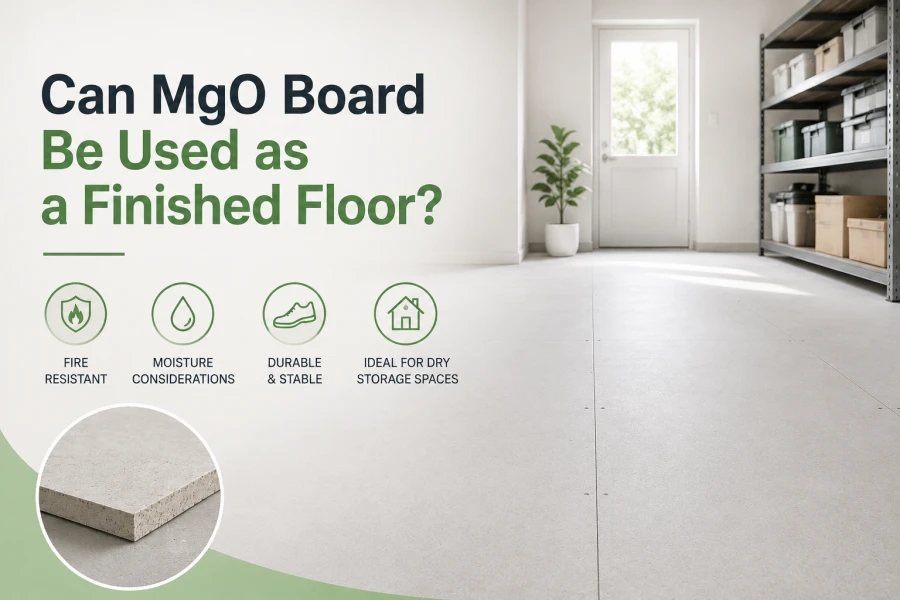
Unlike traditional drywall, MGO board has a dense, mineral-based structure that provides enhanced mechanical strength and stability. It is available in various thicknesses and specifications, making it suitable for applications such as wall panels, ceilings, subflooring, and exterior sheathing.
2.2 Advantages of MGO Board
MGO board is widely recognized for its superior performance in demanding construction environments:
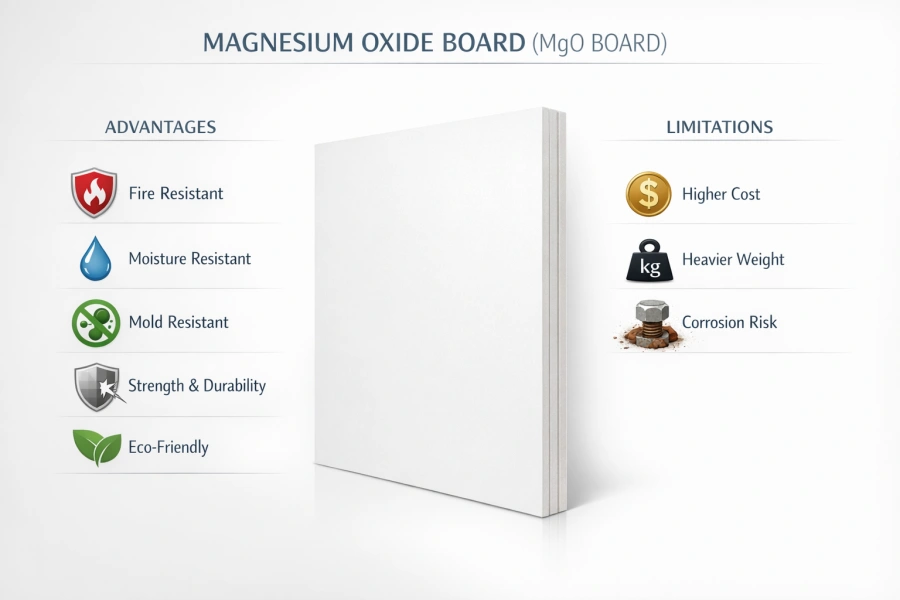
- Excellent fire resistance – As a non-combustible material, MGO board can withstand high temperatures without burning, making it ideal for fire-rated assemblies.
- Strong moisture resistance – It does not swell, warp, or degrade easily in humid or wet conditions, reducing the risk of mold and structural damage.
- High strength and durability – The dense composition provides good impact resistance and long-term stability, especially in high-traffic areas.
- Environmentally friendly – Made from natural minerals, MGO board is generally free from harmful substances such as formaldehyde and has low VOC emissions.
2.3 Limitations of MGO Board
Despite its advantages, MGO board also has some considerations:
- Higher cost – Compared to gypsum board, MGO board is typically more expensive, which may affect project budgets.
- Heavier weight – Its density makes handling and installation more labor-intensive than lightweight drywall.
- Potential corrosion risk – Some magnesium chloride-based boards may cause corrosion to metal fasteners or framing in high-humidity environments if not properly treated or installed.
3. What Is Gypsum Board (Drywall)
3.1 Composition and Structure
Gypsum board, commonly known as drywall or plasterboard, is a widely used building material made from a core of gypsum (calcium sulfate) sandwiched between two layers of durable paper. It is manufactured in large panels that are easy to handle, cut, and install on-site.
Drywall is essentially a type of gypsum board and has become the standard solution for interior walls and ceilings in residential and commercial construction. It is available in various types, including fire-rated, moisture-resistant, and soundproof variants, allowing it to meet different project requirements.
3.2 Advantages of Gypsum Board
Gypsum board (drywall) remains popular due to its practicality and cost efficiency:
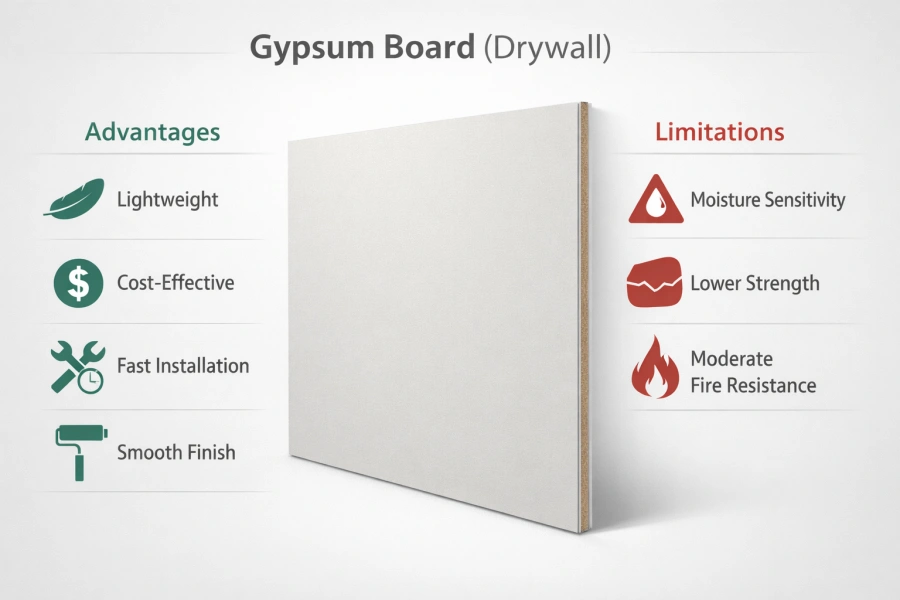
- Lightweight and easy to handle – Compared to denser materials like MGO board, drywall is easier to transport, cut, and install.
- Cost-effective – It is generally more affordable, making it a preferred option for budget-sensitive projects.
- Fast installation – Large panel sizes and simple installation methods help reduce labor time and overall construction timelines.
- Smooth surface finish – Drywall provides a flat, uniform surface that is easy to paint, wallpaper, or decorate.
3.3 Limitations of Gypsum Board
While drywall is versatile, it has several performance limitations:
- Limited moisture resistance – Standard drywall can absorb water, leading to swelling, warping, or mold growth in humid environments.
- Lower strength and durability – It is more prone to dents, cracks, and impact damage compared to more rigid boards.
- Moderate fire resistance – Although fire-rated versions exist, standard drywall does not perform as well as MGO board in high-temperature conditions.
4. Key Differences Between MGO Board and Gypsum Board
4.1 Fire Resistance
One of the most significant differences between MGO board and gypsum board lies in fire performance. MGO board is a non-combustible material that can withstand extremely high temperatures without burning or releasing harmful smoke. This makes it highly suitable for fire-rated systems and buildings with strict safety requirements.
Gypsum board, on the other hand, offers moderate fire resistance due to the chemically bound water within the gypsum core, which slows down heat transfer. While fire-rated drywall variants are available, their performance generally remains lower than that of MGO board in high-risk environments.
4.2 Moisture Resistance
MGO board performs exceptionally well in humid or wet conditions. It does not easily absorb water, warp, or support mold growth, allowing it to maintain its structural integrity over time. This makes it a reliable choice for areas such as bathrooms, basements, and exterior applications.
In contrast, standard gypsum board is vulnerable to moisture. Prolonged exposure to water can lead to swelling, softening, and mold development. Although moisture-resistant drywall (often referred to as green board) improves performance, it still does not match the long-term stability of MGO board in high-humidity environments.
4.3 Strength and Durability
Due to its dense, mineral-based composition, MGO board offers higher strength and better impact resistance. It can withstand mechanical stress, making it suitable for high-traffic areas and commercial applications where durability is critical.
Gypsum board is comparatively softer and more fragile. It is more likely to crack, dent, or become damaged under impact, which may lead to higher maintenance or repair costs over time.
4.4 Environmental Impact
MGO board is often considered an environmentally friendly material. It is typically made from natural minerals, contains low or no volatile organic compounds (VOCs), and can contribute to healthier indoor air quality.
Gypsum board is also based on natural materials, but its production process can be more energy-intensive, and recycling is less commonly implemented in practice. As a result, its overall environmental impact may be higher, especially when considering replacement frequency.
4.5 Cost and Installation
Gypsum board has a clear advantage in terms of cost and ease of installation. It is lightweight, easy to cut, and quick to install, which helps reduce labor costs and project timelines. This makes it a practical choice for large-scale residential and commercial projects.
MGO board, while offering superior performance, is generally more expensive and heavier. Installation may require more effort and careful handling. However, its durability and resistance to damage can help offset the initial investment over the long term.
4.6 Aesthetic Flexibility
Both MGO board and gypsum board can be finished with paint, wallpaper, or decorative coatings. Gypsum board provides a smooth surface that is easy to finish, making it ideal for standard interior designs.
MGO board, due to its strength and stability, supports a wider range of surface applications, including tiling and cladding, without compromising performance. This makes it suitable for both functional and decorative uses in more demanding environments.
4.7 Quick Comparison Table
| Feature | MGO Board | Gypsum Board (Drywall) |
|---|---|---|
| Fire Resistance | Excellent (non-combustible) | Moderate (fire-rated options available) |
| Moisture Resistance | Highly resistant | Limited (moisture-resistant types available) |
| Strength | High | Moderate to low |
| Durability | Long-lasting | Prone to damage |
| Cost | Higher | Lower |
| Installation | Heavier, more labor | Lightweight, easy |
| Environmental Impact | Low VOC, eco-friendly | Moderate impact |
| Applications | High-performance areas | Standard interiors |
5. When to Choose Between MGO Board and Gypsum Board
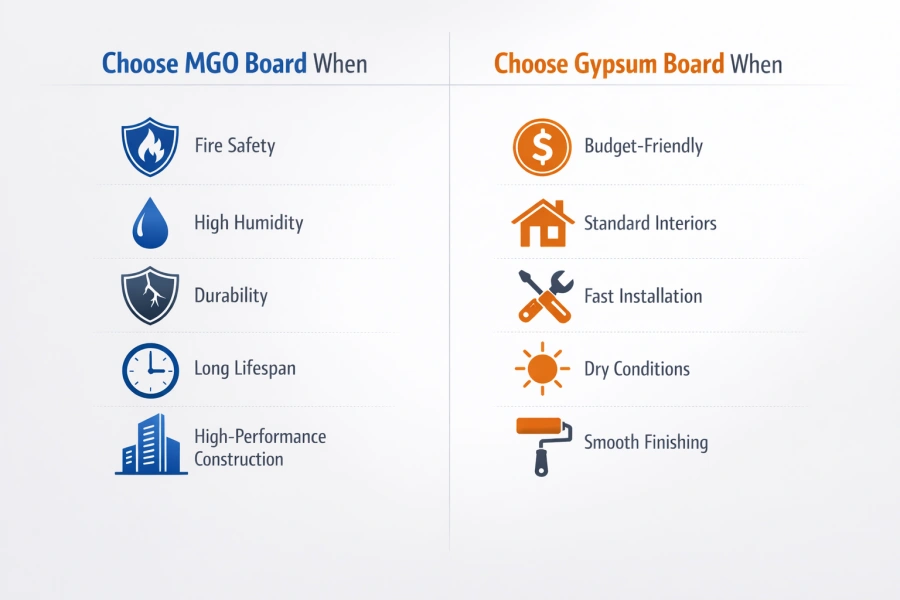
5.1 Choose MGO Board When
MGO board is the better choice in projects where performance, safety, and long-term durability are priorities:
- Fire safety is critical – Ideal for buildings with strict fire codes, such as commercial spaces, hotels, and public facilities.
- High humidity or wet environments – Suitable for bathrooms, kitchens, basements, and even certain exterior applications where moisture resistance is essential.
- High-traffic or impact-prone areas – Its strength and durability make it a reliable option for areas exposed to frequent use or mechanical stress.
- Long service life is required – Projects that prioritize reduced maintenance and long-term performance can benefit from MGO board’s stability.
- Premium or high-performance construction – Often used in projects where higher upfront cost is justified by better safety and durability.
5.2 Choose Gypsum Board When
Gypsum board (drywall) is a practical option for projects focused on cost efficiency and ease of installation:
- Budget is limited – Its lower material and installation cost make it ideal for cost-sensitive projects.
- Standard interior applications – Suitable for living rooms, bedrooms, offices, and other dry indoor spaces.
- Fast construction is required – Lightweight panels allow for quicker installation and reduced labor time.
- Low exposure to moisture or impact – Works well in environments where conditions are stable and performance demands are not extreme.
- Simple finishing needs – Provides a smooth surface that is easy to paint or decorate for standard interior design.
6. Can MGO Board Replace Drywall
In many cases, MGO board can be used as an alternative to drywall, but whether it should replace drywall depends on the specific requirements of the project.
From a performance perspective, MGO board offers clear advantages. It provides superior fire resistance, better moisture stability, and higher strength compared to standard gypsum board. This makes it a strong candidate for applications where safety, durability, and long-term reliability are critical.
However, drywall still remains a practical choice in many situations. Its lower cost, lighter weight, and ease of installation make it more suitable for large-scale residential projects or areas where performance demands are relatively low. For projects with tight budgets or fast construction timelines, drywall can be the more efficient solution.
In reality, MGO board is not always a direct replacement for drywall, but rather a higher-performance upgrade. Many projects use both materials strategically—for example, using MGO board in high-risk or high-moisture areas, and drywall in standard interior spaces—to achieve the best balance between performance and cost.
7. Conclusion
Both MGO board and gypsum board (drywall) play important roles in modern construction, but they serve different needs. MGO board stands out for its fire resistance, moisture performance, and durability, making it ideal for demanding environments and high-performance projects. Gypsum board, on the other hand, remains a cost-effective and convenient solution for standard interior applications.
Choosing between the two materials ultimately depends on the specific priorities of your project—whether that is safety, longevity, budget, or ease of installation. By understanding their key differences and appropriate use cases, you can make a more informed decision that balances performance and cost.
If your project requires enhanced fire protection, moisture resistance, or long-term durability, MGO board is a reliable option worth considering. For more detailed product information or technical support, feel free to contact our team—we are here to help you find the best solution for your construction needs.
Latest Posts