Introduction
In today’s construction industry, builders are under growing pressure to choose materials that deliver more than basic performance. Fire safety, moisture resistance, durability, indoor air quality, and long-term value are now all important factors in wall and sheathing system design.
Traditional materials such as gypsum sheathing, OSB, plywood, and fiber cement board have been used for many years. However, each of them has limitations. Gypsum can lose strength when exposed to moisture. OSB and plywood are combustible and vulnerable to swelling or rot. Fiber cement is durable, but it can be heavy and more difficult to cut.
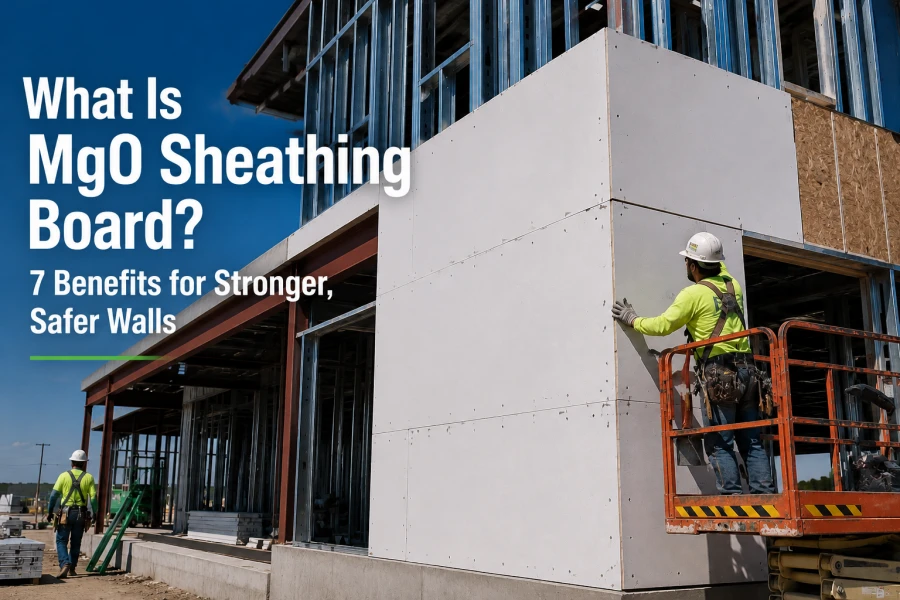
This is why MgO sheathing board has become an increasingly attractive option for modern builders. Made primarily from magnesium oxide and reinforced with fibers or mesh, MgO sheathing provides a strong, fire-resistant, moisture-resistant, and versatile board solution for both interior and exterior construction.
In this guide, we explain what MgO sheathing board is, its seven key benefits, common applications, how it compares with traditional sheathing materials, and how to choose the right board for your project.
What Is MgO Sheathing Board?
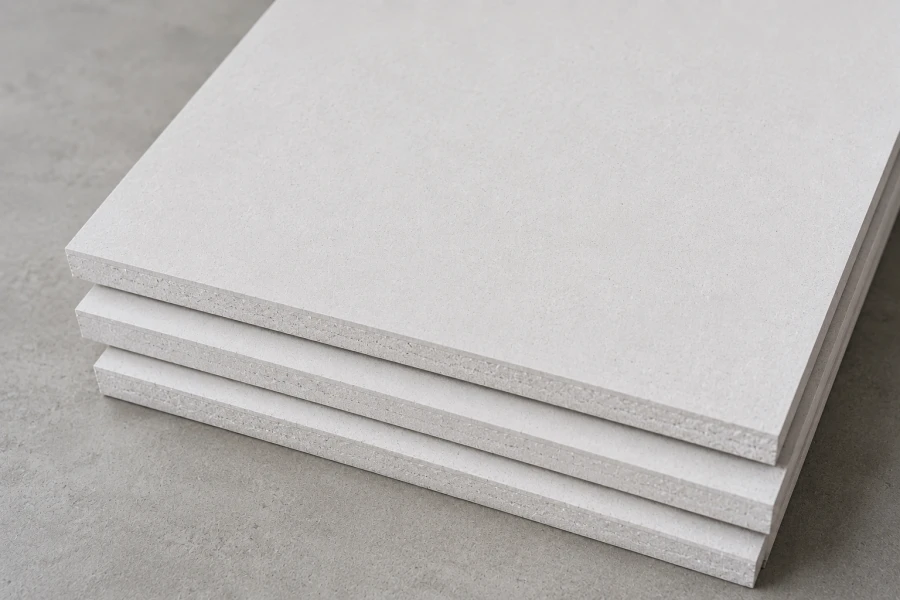
MgO sheathing board, also called magnesium oxide sheathing board, is a high-performance construction panel made mainly from magnesium oxide, magnesium sulfate or magnesium chloride binder, reinforcing fiberglass mesh, and other mineral-based additives.
The result is a dense, stable board that can be used as wall sheathing, interior wall substrate, ceiling board, roof underlayment, floor underlayment, and a base layer for different finishes.
Compared with traditional sheathing materials, MgO board is valued for its fire resistance, dimensional stability, moisture resistance, mold resistance, and durability. It is not simply a replacement for gypsum or OSB. It is a more advanced board option for projects that require better safety and long-term performance.
1. Excellent Fire Resistance
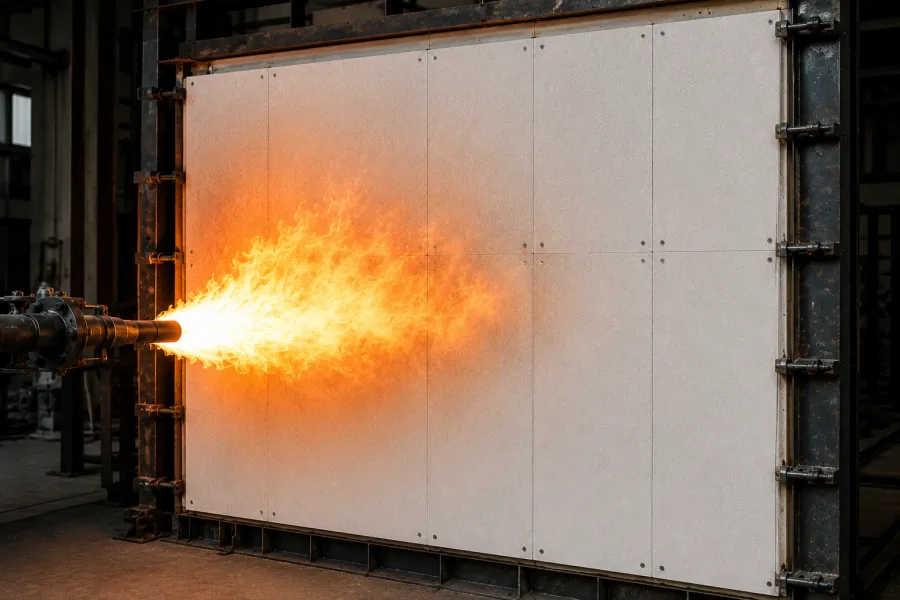
One of the most important advantages of MgO sheathing board is its fire resistance. Magnesium oxide is a mineral-based, non-combustible material, which allows the board to perform well in fire-rated wall, ceiling, and partition systems.
Unlike OSB or plywood, MgO sheathing does not easily ignite or contribute to flame spread. Compared with ordinary gypsum board, it can offer stronger stability in demanding fire-resistant assemblies when properly specified and installed.
This makes MgO sheathing suitable for:
- Residential wall systems
- Commercial buildings
- Schools and hospitals
- Modular construction
- Fire-rated partition walls
- High-rise and public buildings
For builders, fire resistance is not only a product feature. It can also support code compliance, improve project safety, and reduce risk in applications where fire performance is a key requirement.
2. Moisture and Mold Resistance
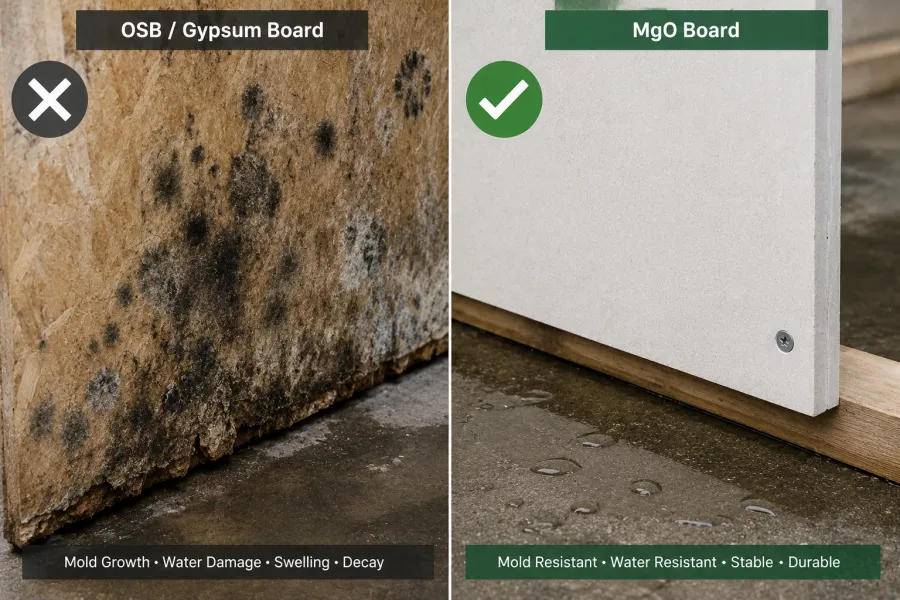
Moisture is one of the biggest challenges for sheathing materials. Gypsum may soften or lose strength when exposed to water. OSB and plywood can swell, warp, or rot in damp environments.
MgO sheathing board offers better resistance to moisture-related damage. It maintains dimensional stability in humid conditions and is less likely to support mold growth compared with many organic or paper-faced materials.
This makes it useful for:
- Exterior wall sheathing under cladding systems
- Bathrooms and kitchens
- Basements and laundry areas
- Coastal or humid regions
- Wet-area tile backing systems
However, it is important to explain this correctly: MgO board is moisture-resistant, but it should not be described as completely waterproof. For exterior use, proper weather barriers, joint treatment, edge sealing, cladding, and system design are still required.
3. Strong Durability and Impact Resistance
MgO sheathing board has a dense mineral structure, often reinforced with fiberglass mesh. This gives it good strength, impact resistance, and long-term durability.
Compared with ordinary gypsum board, it is less likely to break, chip, or suffer surface damage under normal construction conditions. Compared with wood-based boards, it is not vulnerable to termite attack, rot, or combustion in the same way.
This durability helps builders reduce:
- Material damage during handling
- Repair work after installation
- Long-term maintenance problems
- Callbacks caused by moisture or impact damage
For commercial buildings, modular housing, schools, hospitals, and high-traffic areas, this added durability can be a major advantage.
4. Better Dimensional Stability
A good sheathing material should stay flat and stable after installation. Warping, swelling, edge damage, or board movement can create problems for wall finishes, cladding systems, and long-term building performance.
MgO sheathing board has good dimensional stability because of its mineral-based composition. It is less likely to deform compared with plywood or OSB when exposed to changes in humidity.
This makes it especially useful as a substrate for:
- Exterior cladding
- Interior wall finishes
- Tile systems
- Modular wall panels
- Prefabricated construction components
For builders, stable boards mean easier installation, better finish quality, and fewer issues after the project is completed.
5. Easy Installation and Workability
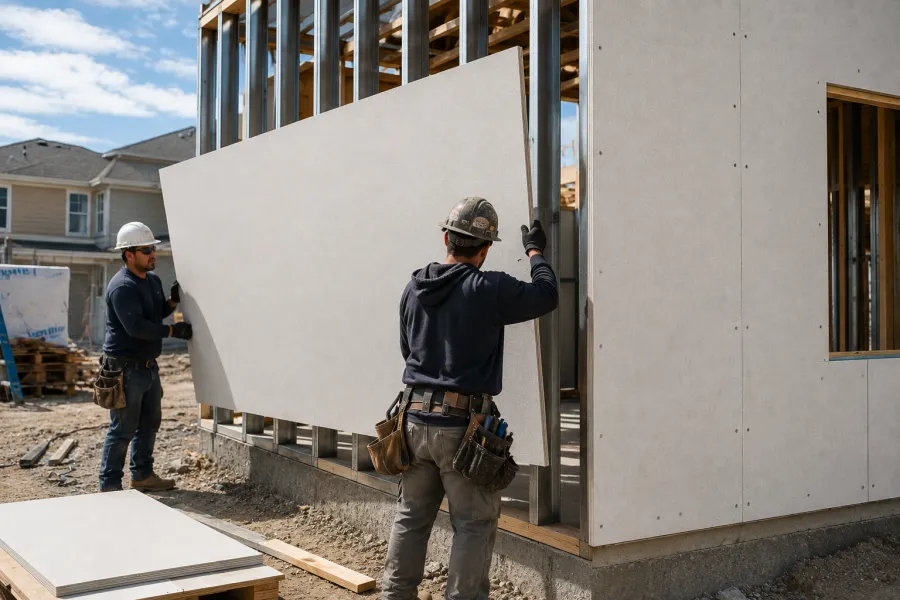
Although MgO sheathing is a high-performance board, it can usually be cut, drilled, fastened, and installed with common construction tools. This makes it practical for contractors who are already familiar with standard panel installation methods.
Depending on thickness and density, MgO sheathing can be easier to handle than fiber cement board. It can also be used with different fastening systems, wall frames, and finishing materials.
Typical installation advantages include:
- Can be cut with standard tools
- Can be fixed with screws or nails depending on system design
- Suitable for steel or timber framing
- Compatible with many finishes and cladding systems
- Useful in both traditional and prefabricated construction
For best results, builders should follow the supplier’s installation guide, especially regarding fastener spacing, joint treatment, edge sealing, and exterior wall protection.
6. Eco-Friendly and Safe Material Profile
Sustainability has become an important factor in construction material selection. MgO sheathing board is made mainly from mineral-based raw materials and does not require the same high-temperature production process as Portland cement-based products.
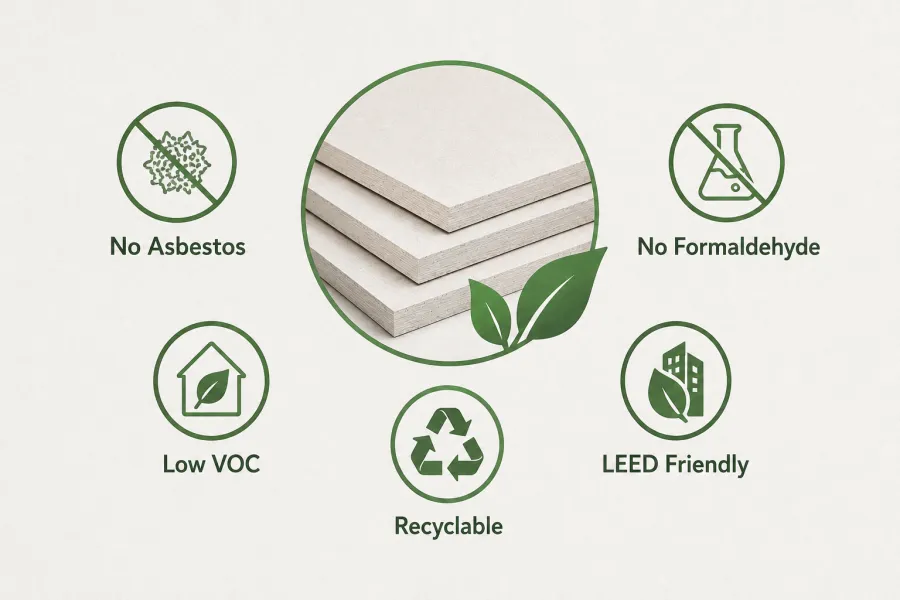
High-quality MgO boards are generally free from asbestos and formaldehyde. They also do not rely on wood fibers in the same way as OSB or plywood, which can be an advantage for projects focused on fire safety, durability, and indoor air quality.
Potential sustainability advantages include:
- Mineral-based composition
- Low VOC emissions
- No asbestos or formaldehyde in quality products
- Long service life
- Reduced replacement and maintenance needs
- Support for green building goals
For LEED, BREEAM, or other green building projects, MgO sheathing may help support sustainability objectives when backed by proper documentation and test reports.
7. Versatile Applications
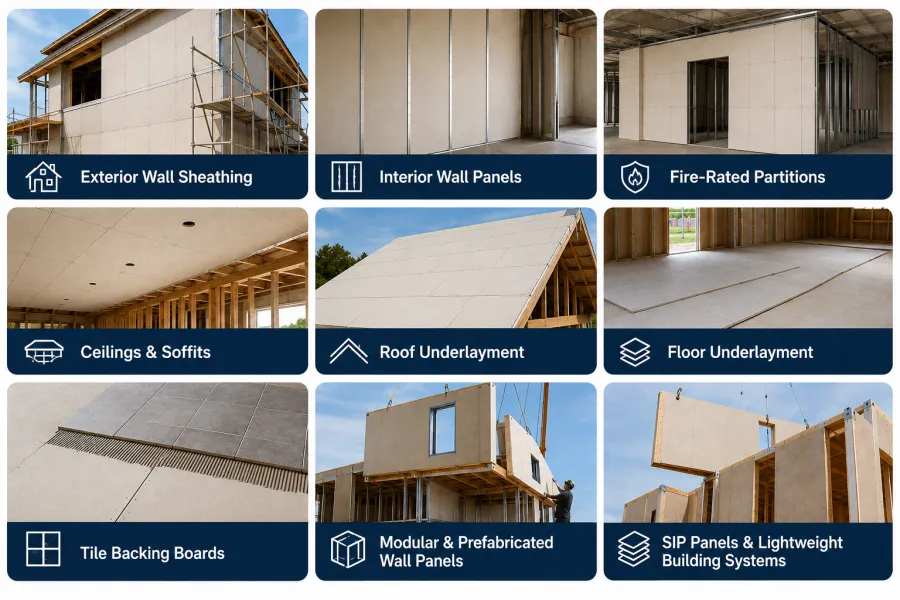
MgO sheathing board is highly versatile. It can be used in many areas where builders need fire resistance, moisture resistance, strength, or a stable substrate.
Common applications include:
- Exterior wall sheathing
- Interior wall panels
- Fire-rated partitions
- Ceilings and soffits
- Roof underlayment
- Floor underlayment
- Tile backing boards
- Modular and prefabricated wall panels
- SIP panels and lightweight building systems
This versatility makes MgO sheathing suitable for residential, commercial, industrial, and modular construction projects.
MgO Sheathing vs Traditional Sheathing Materials
MgO Sheathing vs Gypsum Sheathing
Gypsum sheathing is widely used, but it can be sensitive to moisture and may require additional protection in wet conditions. MgO sheathing offers better resistance to moisture, mold, impact, and fire, making it suitable for more demanding applications.
MgO Sheathing vs OSB and Plywood
OSB and plywood are affordable and commonly used for structural sheathing, but they are combustible and vulnerable to water damage. MgO sheathing provides a non-combustible, mineral-based alternative with better fire and moisture performance.
MgO Sheathing vs Fiber Cement Board
Fiber cement board is durable and fire-resistant, but it is often heavier and more difficult to cut. MgO sheathing can offer similar fire and moisture advantages while being easier to handle in many applications.
| Feature | MgO Sheathing | Gypsum | OSB / Plywood | Fiber Cement |
|---|---|---|---|---|
| Fire Resistance | Excellent | Moderate | Poor | Excellent |
| Moisture Resistance | Excellent | Poor | Poor | Good |
| Mold Resistance | Excellent | Poor | Poor | Good |
| Impact Strength | High | Low | Moderate | High |
| Weight | Moderate | Light | Light | Heavy |
| Ease of Installation | Easy | Easy | Easy | Moderate |
Challenges and Considerations
MgO sheathing board has many advantages, but builders should still consider several practical factors before using it.
First, the initial material cost may be higher than gypsum, OSB, or plywood. However, the long-term value can be better when fire resistance, moisture resistance, and reduced maintenance are important.
Second, product quality varies between manufacturers. Low-quality MgO boards may have problems such as poor strength, surface powdering, or inconsistent performance. Builders should choose suppliers with stable production, quality control, and third-party test reports.
Third, exterior use requires proper system design. MgO board is moisture-resistant, but it should still be protected with suitable waterproofing, joint treatment, cladding, and installation details.
How to Choose the Right MgO Sheathing Board
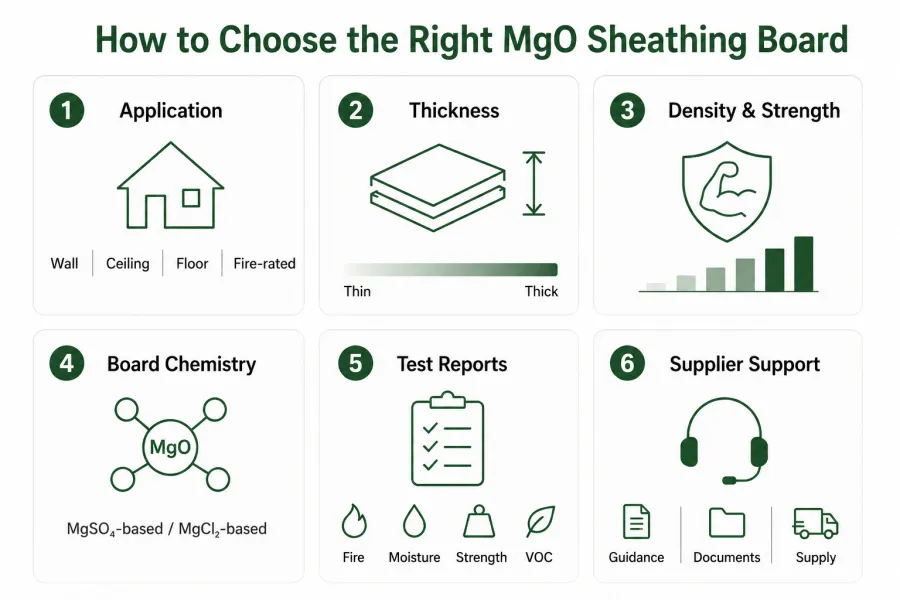
When choosing MgO sheathing board, consider the following factors:
- Application: interior wall, exterior sheathing, ceiling, flooring, or fire-rated system
- Thickness: thinner boards for ceilings or interior walls, thicker boards for floors or stronger wall systems
- Density and strength: higher density may be required for impact resistance or floor applications
- Board chemistry: MgSO₄-based or MgCl₂-based boards depending on project needs
- Test reports: fire resistance, moisture performance, bending strength, and VOC test data
- Supplier support: installation guidance, technical documentation, and stable supply capacity
For export projects, it is also important to confirm local code requirements, certification expectations, and whether the board will be tested as a single panel or as part of a complete wall assembly.
Conclusion
MgO sheathing board is a strong, fire-resistant, moisture-resistant, and versatile building panel for modern construction. Compared with gypsum, OSB, plywood, and fiber cement board, it offers a better balance of safety, durability, installation flexibility, and long-term value.
For builders, contractors, architects, and modular construction manufacturers, MgO sheathing is not just another board option. It is a practical solution for stronger, safer, and more durable walls.
If your project requires reliable fire performance, better moisture resistance, and a stable sheathing material, MgO sheathing board is worth serious consideration.
Latest Posts