1. Introduction to Gypsum Board
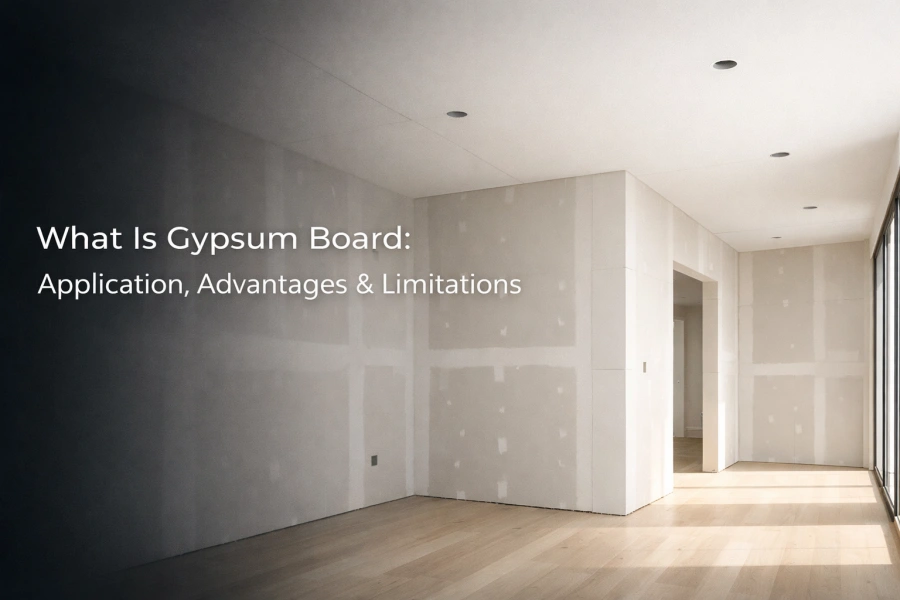
Gypsum board, also widely known as drywall or a gypsum panel, is one of the most commonly used materials in modern construction. It is widely applied in residential, commercial, and industrial buildings for walls, ceilings, and interior partitions due to its versatility, cost-effectiveness, and ease of installation.
In today’s construction industry, gypsum board plays an essential role in creating smooth, durable, and aesthetically pleasing interior surfaces. Whether used for new construction or renovation projects, it provides a reliable solution for achieving clean finishes and efficient building performance.
However, as construction requirements become more demanding—especially in terms of fire safety and moisture resistance—different types of gypsum-based products have been developed, including fire-resistant variants such as fireproof drywall. Understanding the structure, materials, and characteristics of drywall is the first step in choosing the right solution for your project.
2. What Is Gypsum Board?
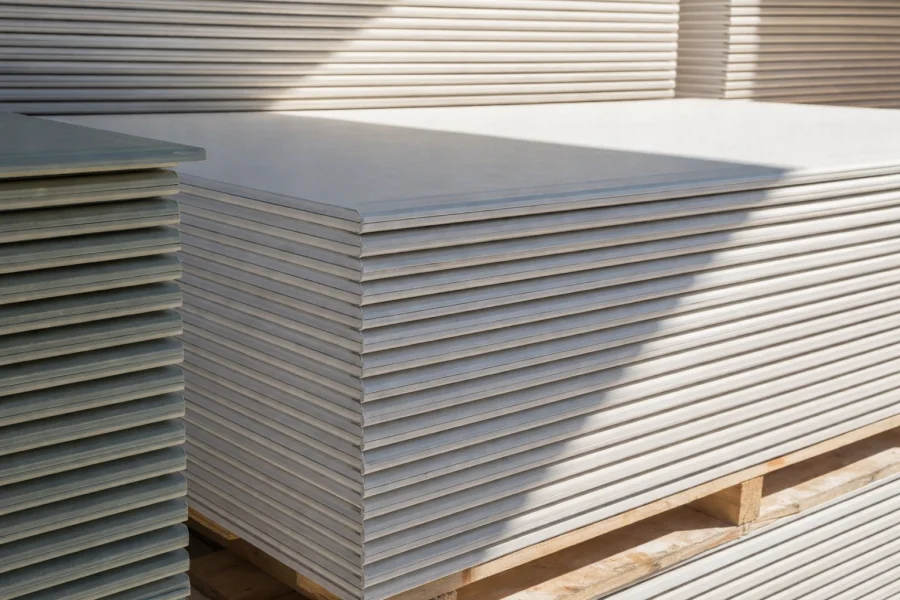
Gypsum board is a building panel made primarily from a natural mineral called gypsum. The gypsum core is sandwiched between two layers of durable paper or fiberglass facing materials, forming a flat, rigid board that can be easily installed in interior construction.
The core function of gypsum board is to provide a smooth and stable surface for walls and ceilings. It serves as a base material that can be painted, wallpapered, or finished with various decorative coatings.
There are different types of drywall available in the market, including:
- Standard gypsum panel (regular drywall)
- Moisture-resistant gypsum panel (for damp environments)
- Fire-resistant gypsum panel (commonly known as fireproof drywall)
Each type is designed to meet specific performance requirements while maintaining the core characteristics of gypsum-based materials.
3. Raw Materials of Gypsum Board
The main component of gypsum board is gypsum, a naturally occurring mineral composed of calcium sulfate dihydrate (CaSO₄·2H₂O). This material is widely available and is valued for its fire-resistant and environmentally friendly properties.
In addition to gypsum, the manufacturing of drywall involves several other key materials:
3.1 Paper or Fiberglass Facing
The outer layers of gypsum board are typically made of strong paper or fiberglass mats. These layers provide structural support, improve durability, and help maintain the shape of the board during installation and use.
3.2 Additives and Reinforcements
Depending on the type of gypsum board, various additives may be included in the core, such as:
- Fiberglass fibers (for strength and fire resistance)
- Vermiculite or perlite (for thermal performance)
- Chemical additives (to improve fire resistance or moisture resistance)
These additives are especially important in specialized products like fire-resistant gypsum boards.
3.3 Water (for Processing)
Water is used during the manufacturing process to create a slurry with gypsum powder. Once formed, the water reacts chemically with the gypsum and later evaporates as the board sets and dries.
4. Manufacturing Process of Gypsum Board
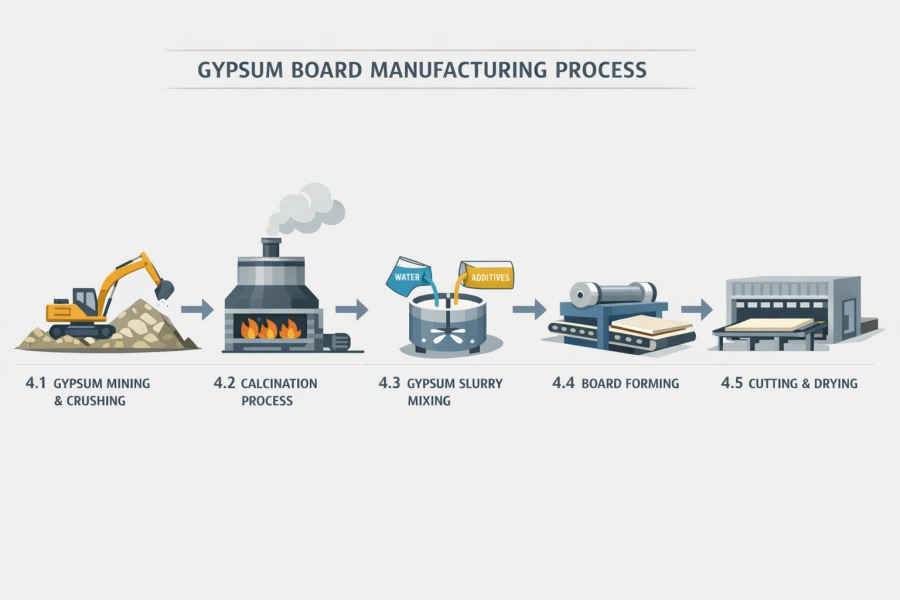
The production of gypsum board involves a carefully controlled industrial process designed to ensure consistency, strength, and quality. Although different manufacturers may use slightly varied techniques, the general manufacturing process follows these key steps:
4.1 Gypsum Processing and Calcination
Natural gypsum rock is first mined and then crushed into a fine powder. It is then heated in a process called calcination, where part of the water content is removed. This transforms the material into a dry powder known as plaster of Paris.
4.2 Mixing and Slurry Formation
The calcined gypsum is mixed with water to form a smooth slurry. At this stage, various additives—such as fibers, foaming agents, and fire-retardant chemicals—can be incorporated depending on the desired performance of the board.
4.3 Forming the Board
The slurry is poured onto a continuous layer of paper or fiberglass mat. Another layer of facing material is placed on top, forming a sandwich structure. The material is then shaped to the required thickness.
4.4 Setting and Cutting
As the gypsum slurry begins to react with water, it hardens and sets into a solid form. The continuous board is then cut into standard sizes, typically such as 1200×2400mm or customized dimensions depending on market requirements.
4.5 Drying Process
The cut boards are passed through drying kilns to remove excess moisture. This step ensures the boards achieve their final strength, stability, and durability before being packaged and shipped.
5. Key Advantages of Gypsum Board
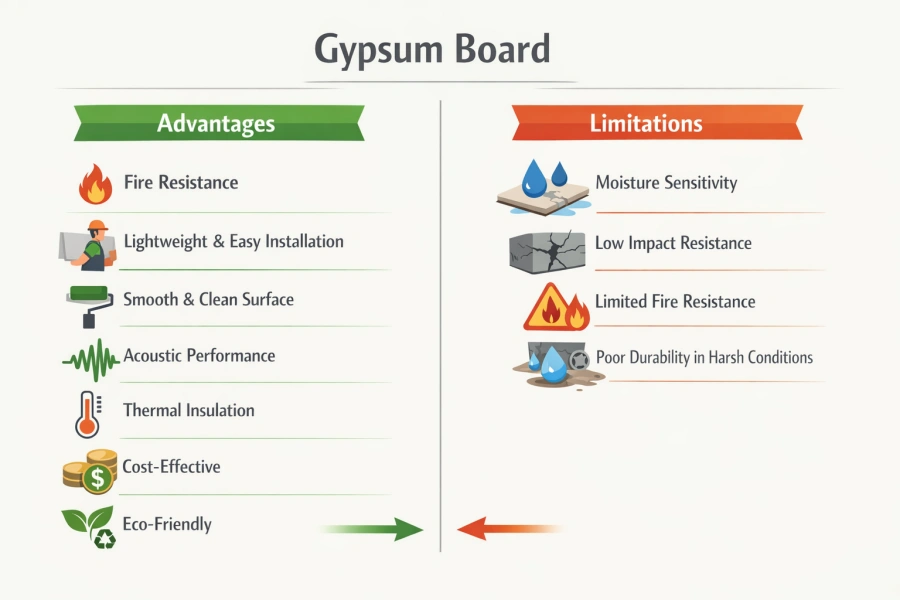
Gypsum board has become a standard material in modern construction due to its balance of performance, cost, and ease of use. Below are its main advantages:
5.1 Fire Resistance
One of the most important properties of gypsum board is its natural fire resistance. Gypsum contains chemically bound water, which is released as steam when exposed to high temperatures.
This process helps to:
- Slow down the spread of fire
- Delay heat transfer
- Provide valuable time for evacuation
5.2 Lightweight and Easy Installation
Gypsum boards are significantly lighter than traditional building materials such as brick or concrete. This makes them:
- Easier to transport
- Faster to install
- Less labor-intensive
Builders can easily cut, shape, and install gypsum boards using basic tools, making them highly efficient for both small and large projects.
5.3 Smooth and Clean Surface
Gypsum board provides a flat, even surface that is ideal for finishing. It can be easily:
- Painted
- Wallpapered
- Textured
This reduces the need for additional plastering work and ensures a professional interior appearance.
5.4 Acoustic Performance
Gypsum board offers good sound insulation properties, helping to reduce noise transmission between rooms. This makes it suitable for:
- Residential buildings
- Office spaces
- Hotels and apartments
With proper installation and layering, its acoustic performance can be further enhanced.
5.5 Thermal Insulation
Gypsum board contributes to indoor temperature regulation by slowing down heat transfer. While it is not a primary insulation material, it works effectively as part of a building system to improve energy efficiency.
5.6 Cost-Effective Solution
Compared to other wall and ceiling materials, gypsum board is widely available and relatively inexpensive. Its affordability, combined with low installation costs, makes it a preferred choice for a wide range of construction projects.
5.7 Eco-Friendly Material
Gypsum is a natural and recyclable material. Many gypsum boards are produced using recycled content and generate relatively low environmental impact during manufacturing.
This makes gypsum board a more sustainable option compared to many synthetic building materials.
6. Limitations of Gypsum Board
While gypsum board offers many advantages, understanding its limitations is essential for choosing the right material for your construction project.
6.1 Moisture Sensitivity
Standard gypsum board can absorb water, which may cause:
- Swelling or sagging
- Mold or mildew growth
- Reduced structural integrity
For moisture-prone areas such as bathrooms, kitchens, or basements, alternatives like magnesium oxide (MgO) boards or cement boards may be preferred due to superior water resistance.
6.2 Impact Resistance
Gypsum boards are relatively soft and prone to dents or cracks from heavy impacts.
6.3 Fire Resistance Limitations
Although standard gypsum board has natural fire-resistant properties, its protection is limited compared to specialized fireproof drywall or MgO boards. In projects where high fire safety is critical, fire-rated boards should be considered.
6.4 Durability Under Harsh Conditions
Gypsum boards may perform poorly in environments with:
- High humidity
- Continuous vibration
- Mechanical stress
7. Applications of Gypsum Board
Gypsum board is widely used in both residential and commercial construction. Common applications include:
- Interior Partition Walls: Lightweight and versatile for room divisions
- Ceilings: Smooth, easy-to-finish surfaces for suspended or false ceilings
- Wall Cladding: Provides a base for painting, wallpaper, or decorative finishes
- Acoustic Panels: Reduces noise transmission in offices, apartments, and hotels
- Fire-Rated Areas: With specialized boards, it can be used for stairwells, utility rooms, and fire-rated partitions
Its flexibility and ease of installation make gypsum board a preferred choice in projects of all scales.
8. Installation of Gypsum Board
Proper installation is key to achieving the performance and aesthetics expected from gypsum boards. General steps include:
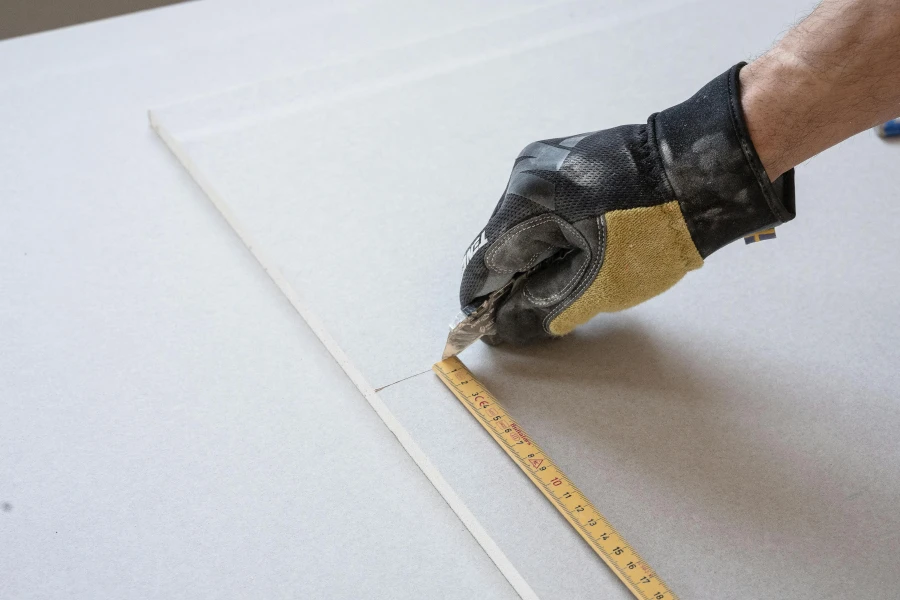
- Measuring and Cutting:
- Boards can be easily cut to size using a utility knife or saw.
- Ensure accurate measurements for walls, ceilings, and openings.
- Framing Preparation:
- Secure wall or ceiling frames with metal or wooden studs.
- Maintain proper spacing according to manufacturer recommendations.
- Board Mounting:
- Attach boards using screws or nails, ensuring they are flush with the surface.
- Avoid over-tightening to prevent damage.
- Joint Taping and Finishing:
- Apply joint tape and compound to seams and corners.
- Sand and smooth surfaces to prepare for painting or other finishes.
- Moisture and Fire Considerations:
- For damp areas, use moisture-resistant boards.
- For fire-rated areas, select appropriate fireproof drywall or specialized boards.
Following these best practices ensures that gypsum boards perform as intended, providing smooth surfaces, fire resistance, and durability.
9. What Is Fireproof Drywall?
Fireproof drywall, also known as fire-resistant gypsum board, is a specialized type of building material designed to enhance fire resistance. It is widely used in construction where fire safety is a priority, such as commercial buildings and fire-rated partitions.
By incorporating materials like glass fibers and fire-retardant additives, fireproof drywall can withstand high temperatures for a longer period compared to standard gypsum board.
9.1 How Fireproof Drywall Works
Gypsum-based materials naturally contain water molecules within their core. When exposed to fire, these water molecules are released as steam, which helps:
- Absorb heat energy
- Slow down temperature rise
- Delay fire spread
9.2 Applications of Fireproof Drywall
Fireproof drywall is commonly used in areas where fire resistance is critical, including:
- Stairwells
- Elevator shafts
- Utility rooms
- Fire-rated walls and partitions
- Commercial and residential buildings
9.3 Key Benefits of Fireproof Drywall
- Enhanced Fire Resistance: Helps delay fire spread and provides more time for evacuation and damage control.
- Better Durability: Offers improved strength, crack resistance, and stability compared to standard gypsum board.
- Versatile Use: Suitable for a wide range of applications, including walls, ceilings, and fire-rated enclosures.
9.4 Limitations
- Limited Fire Resistance Duration: Fireproof drywall can resist fire for a specific time, depending on thickness, composition, and installation quality.
- Moisture Sensitivity: Prolonged exposure to moisture may cause swelling, warping, or mold growth.
- Higher Cost: Generally more expensive than standard gypsum board due to enhanced materials and performance.
10. Conclusion
Gypsum board is one of the most widely used materials in modern construction due to its lightweight structure, smooth finish, ease of installation, and cost-effectiveness. It is commonly applied in interior walls, ceilings, and partitions, and offers additional benefits such as fire resistance, sound insulation, and environmental friendliness.
However, gypsum board also has certain limitations, including sensitivity to moisture, limited impact resistance, and reduced durability in harsh environments. For projects with higher performance requirements—such as improved fire safety, moisture resistance, or long-term durability—alternative materials like fireproof drywall or advanced solutions such as MgO boards may be more suitable.
The right material choice depends on factors such as project requirements, environmental conditions, safety standards, and budget. By carefully evaluating these aspects, builders and designers can ensure both safety and long-term performance.
Latest Posts