
1. Introduction
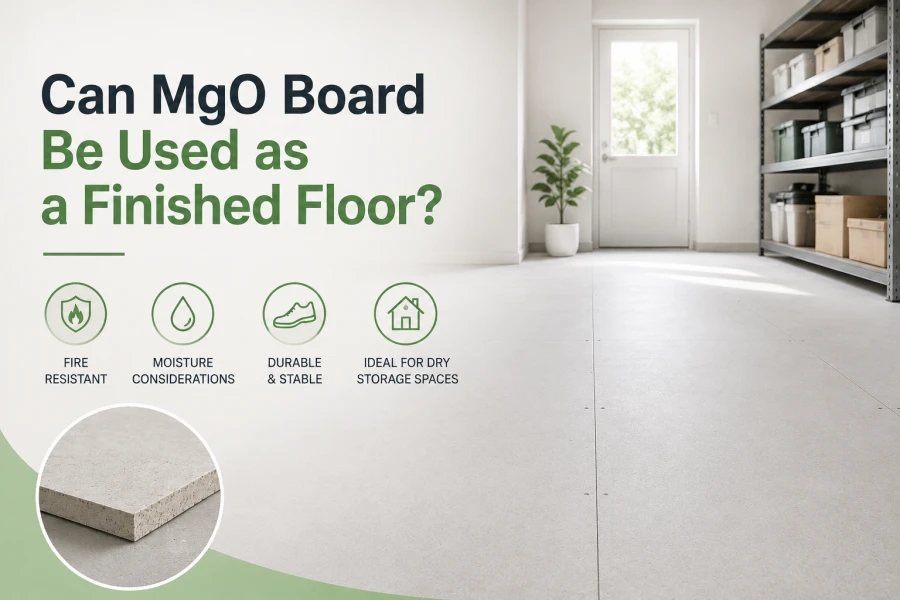
Magnesium oxide (MgO) flooring is becoming increasingly popular in modern construction, particularly in projects that require better fire resistance, moisture resistance, and long-term dimensional stability than traditional wood-based subfloors.
However, despite its growing popularity, MgO flooring is not a perfect solution for every application. Like any construction material, it comes with both advantages and limitations that builders, architects, and property owners should understand before making a decision.
This article provides a realistic overview of the pros and cons of magnesium oxide flooring, helping you evaluate whether it is the right choice for your project.
2. Pros of MgO Flooring
2.1 Better Fire Resistance Than Wood-Based Subfloors
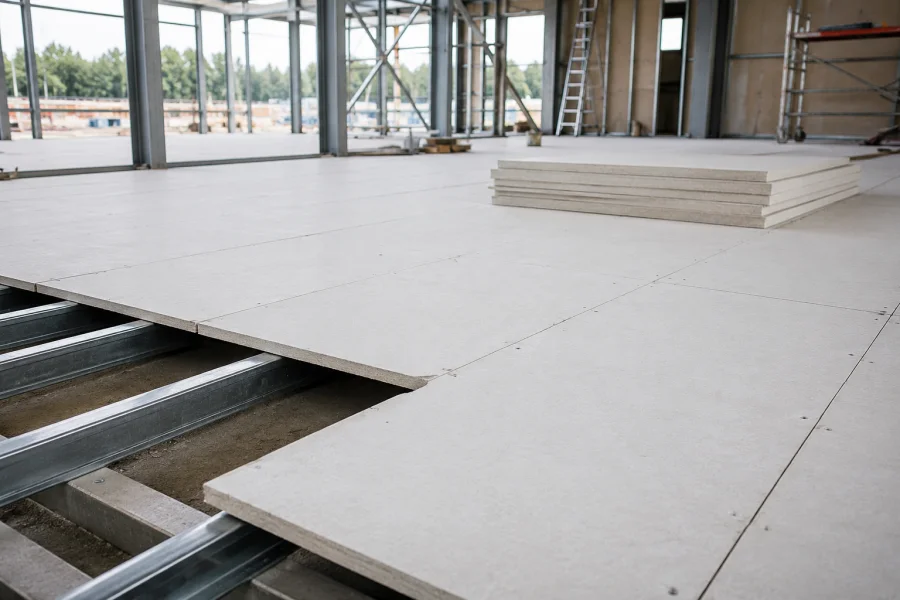
One of the biggest advantages of MgO flooring is its non-combustible nature. Compared with plywood or OSB, MgO boards perform significantly better in fire-rated flooring assemblies and do not contribute heavily to flame spread.
This makes MgO flooring particularly suitable for:
- Multi-story buildings
- Modular construction
- Hotels
- Schools
- Commercial projects with strict fire codes
2.2 Improved Moisture and Mold Resistance
Compared with traditional wood-based flooring panels, MgO flooring is more resistant to:
- Swelling
- Warping
- Mold growth
- Moisture-related deformation
This makes it a practical option for humid environments such as bathrooms, basements, kitchens, and utility areas.
2.3 Good Dimensional Stability
High-quality MgO flooring maintains relatively stable dimensions under temperature and humidity changes.
Unlike some wood-based subfloors, it is less likely to:
- Expand excessively
- Shrink
- Curl
- Develop uneven surfaces over time
This helps maintain a flatter and more stable flooring system.
2.4 Long-Term Durability
When properly manufactured and installed, MgO flooring can provide long service life with relatively low maintenance requirements.
Its resistance to moisture, mold, and fire-related damage makes it attractive for projects prioritizing long-term durability rather than minimum upfront cost.
3. Real Limitations of MgO Flooring
3.1 Product Quality Varies Significantly
One of the biggest challenges in the MgO industry is inconsistent product quality.
Not all MgO flooring boards perform equally. Differences in:
- raw material quality
- chloride content
- curing methods
- density
- fiberglass reinforcement
can dramatically affect long-term performance.
Low-quality MgO boards may experience issues such as:
- excessive moisture absorption
- surface powdering
- edge weakness
- corrosion-related concerns
Choosing an experienced and reliable manufacturer is extremely important.
3.2 Moisture Resistant Does Not Mean Waterproof
A common misconception is that MgO flooring is completely waterproof.
In reality, MgO boards generally perform well in humid environments, but prolonged direct water exposure may still affect the board over time—especially at unsealed edges and joints.
Proper waterproofing, sealing, and installation practices are still necessary in wet-area applications.
3.3 Installation Is More Sensitive Than Plywood
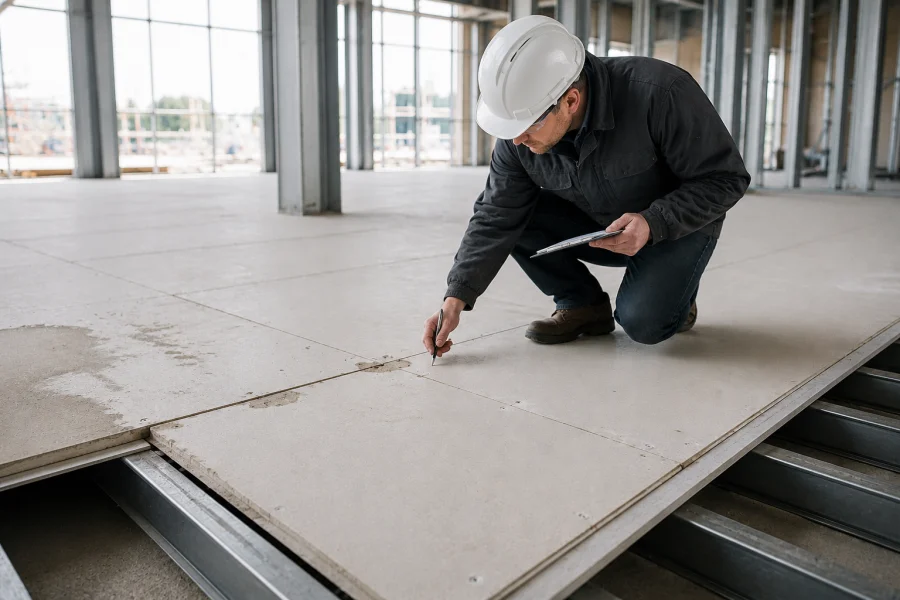
Although MgO flooring can be installed using standard construction tools, proper installation practices are important.
Common installation mistakes include:
- insufficient expansion gaps
- incorrect fastener spacing
- unsupported joints
- poor subfloor leveling
- improper edge sealing
Unlike plywood, MgO boards are generally less forgiving when incorrectly installed. Poor installation may lead to cracking, joint movement, or uneven floor surfaces.
3.4 Higher Initial Material Cost
MgO flooring usually costs more than plywood or OSB subfloors.
For projects focused mainly on minimizing upfront material costs, traditional wood-based panels may still be the more economical option.
However, in projects where fire resistance, durability, and moisture performance are priorities, the long-term value of MgO flooring may justify the higher initial investment.
3.5 Local Availability and Certification May Be Limited
In some regions, MgO flooring is still considered a relatively specialized building material.
As a result:
- local stock availability may be limited
- some contractors may lack installation experience
- additional testing or documentation may be required for code approval
Builders should always verify:
- fire test reports
- structural performance data
- moisture resistance
- local building code compliance
before selecting a product.
4. MgO Flooring vs Other Subfloor Materials
4.1 MgO Flooring vs Plywood
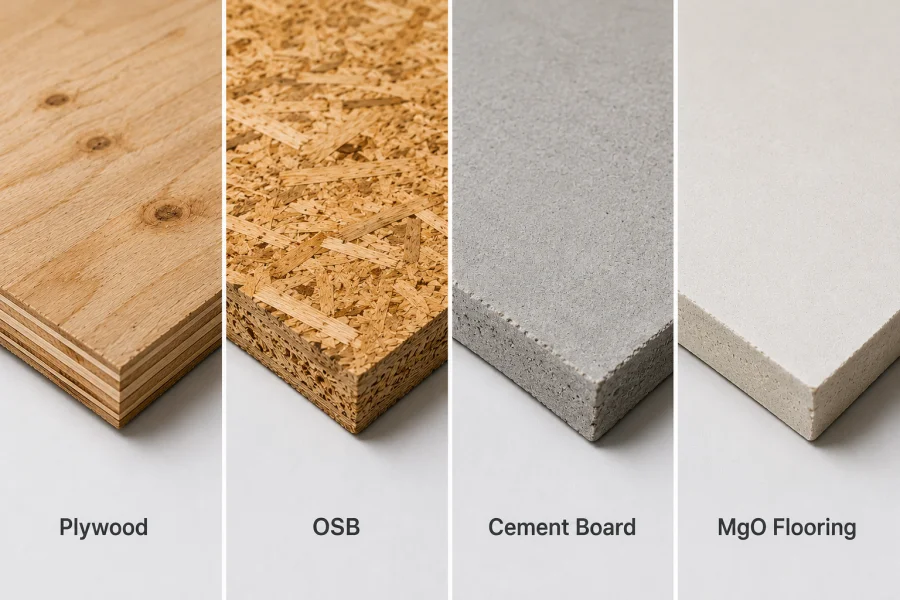
MgO flooring offers significantly better fire and moisture resistance than plywood, but usually comes at a higher material cost and requires more careful installation.
4.2 MgO Flooring vs OSB
Compared with OSB, MgO flooring provides better dimensional stability and mold resistance in humid environments, although OSB generally remains cheaper and more widely available.
4.3 MgO Flooring vs Cement Board
Cement board provides strong fire and moisture resistance but is typically heavier and more difficult to cut or handle.
MgO flooring offers similar safety benefits while remaining lighter and easier to install.
5. Is MgO Flooring Worth It?
MgO flooring can be an excellent choice for:
- fire-rated buildings
- steel-frame construction
- modular structures
- moisture-prone environments
- long-life flooring systems
However, its long-term performance depends heavily on:
- product quality
- correct installation
- proper project design
- selecting the right application
For builders and property owners prioritizing safety, durability, and long-term stability, MgO flooring can provide important advantages over traditional subfloor materials.
6. Final Thoughts
Magnesium oxide flooring combines fire resistance, moisture resistance, and structural stability in a way that many traditional subfloor materials cannot.
At the same time, understanding its limitations is equally important. Product quality differences, installation sensitivity, and higher upfront costs should all be carefully considered during project planning.
When sourced from a reliable manufacturer and installed correctly, MgO flooring can be a durable and high-performance solution for modern construction projects.
Latest Posts