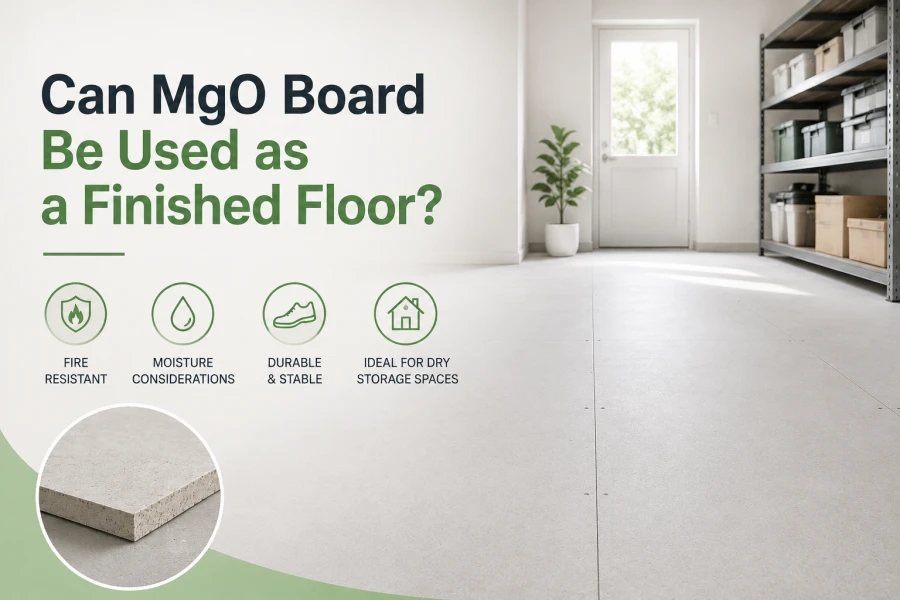
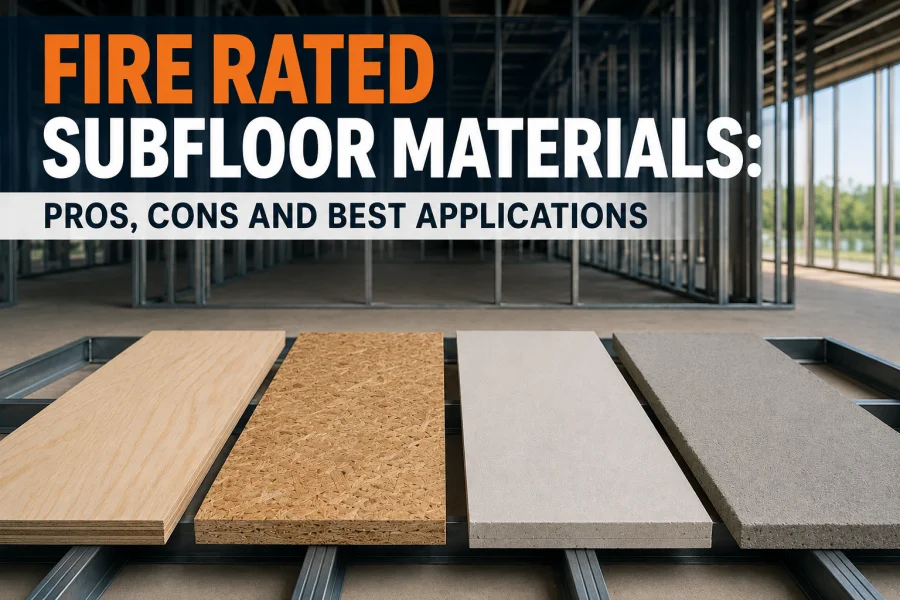
1. Introduction to Fire Rated Subfloors
1.1 What Is a Fire Rated Subfloor?
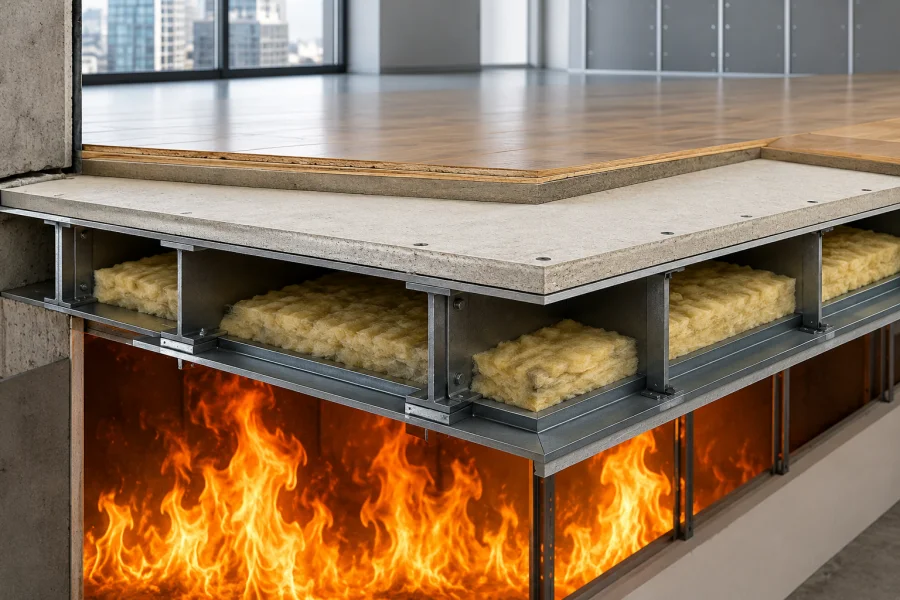
A fire rated subfloor is a structural flooring layer designed to resist fire and maintain stability during high-temperature exposure. Unlike standard plywood or OSB subfloors, fire rated subfloors are manufactured using non-combustible or fire-resistant materials that help slow flame spread and improve overall building safety.
Fire rated subfloors are commonly used in:
- Multi-story residential buildings
- Commercial and industrial facilities
- Hotels and hospitals
- Modular and prefabricated structures
- Fire-rated floor assemblies
These flooring systems are typically tested according to standards such as ASTM E119, ASTM E84, or EN 13501 to evaluate flame spread, structural stability, and fire endurance.
1.2 Why Fire Resistance Matters in Subfloor Construction
The subfloor is the structural foundation of the entire flooring system. If the subfloor fails during a fire, the stability of the finished floor can be compromised, increasing the risk of structural collapse and rapid flame spread.
Modern construction projects no longer evaluate flooring materials based only on cost or strength. Builders now consider:
- Fire performance
- Moisture resistance
- Mold prevention
- Dimensional stability
- Structural durability
- Acoustic performance
- Long-term maintenance requirements
As fire safety regulations become stricter in residential and commercial construction, mineral-based materials such as MgO board and cement board are increasingly used in fire rated flooring systems.
2. Common Fire Rated Subfloor Materials
Before selecting a subfloor material, it is important to understand how different materials perform under fire exposure, moisture conditions, and structural loading. Each material offers different advantages depending on the project type and installation environment.
2.1 Plywood Subfloor
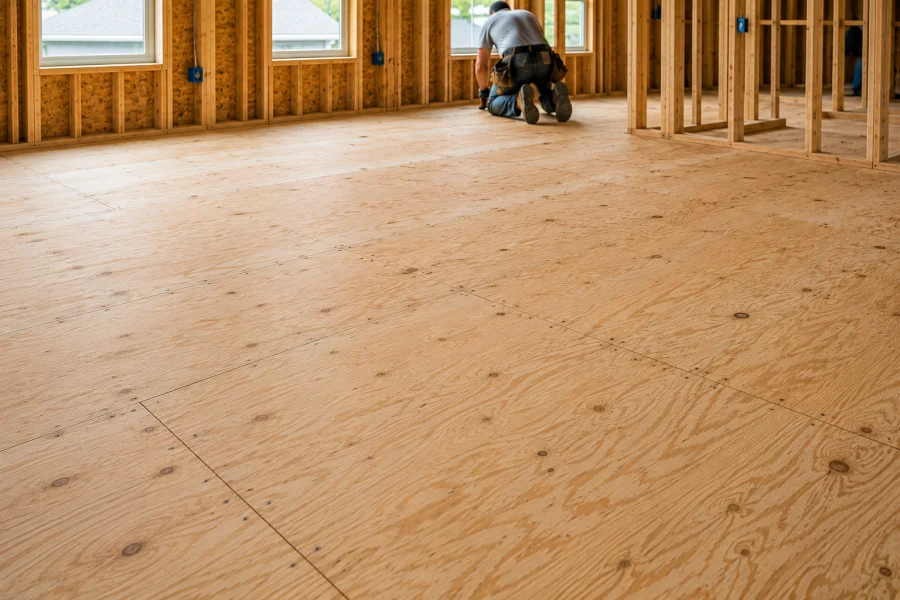
Plywood remains one of the most widely used subfloor materials in residential construction because of its affordability, structural strength, and ease of installation.
Made from multiple layers of wood veneer bonded together with adhesives, plywood provides good load-bearing performance and works well in dry indoor environments.
Advantages
- Lightweight and easy to install
- Widely available and cost-effective
- Good structural rigidity for residential applications
- Compatible with most floor finishes
Limitations
- Combustible material with low fire resistance
- Susceptible to moisture damage and swelling
- Can delaminate over time in humid environments
- Requires additional fireproofing in fire-rated assemblies
Best Applications
- Standard residential housing
- Dry indoor environments
- Budget-focused projects
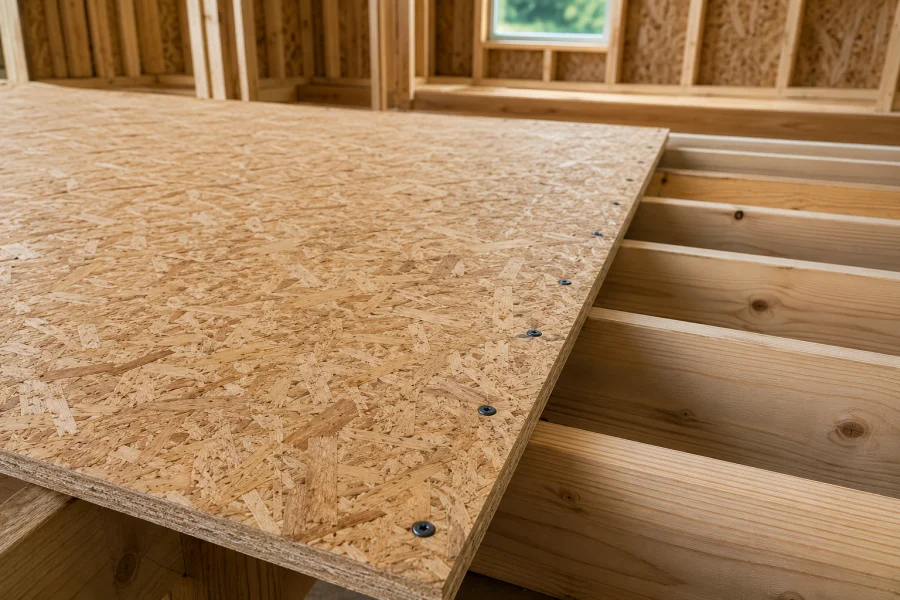
2.2 Oriented Strand Board (OSB) Subfloor
OSB is manufactured using compressed wood strands and adhesives, creating a dense and consistent structural panel. It is commonly used as a lower-cost alternative to plywood.
Advantages
- Lower material cost than plywood
- Uniform thickness and fewer internal voids
- Good structural performance for residential floors
- Easy to cut and fasten
Limitations
- Lower moisture resistance than mineral boards
- Can swell when exposed to water
- Limited fire resistance
- May require additional fire-rated underlayment
Best Applications
- Budget residential projects
- Wood-frame housing
- Standard indoor flooring systems
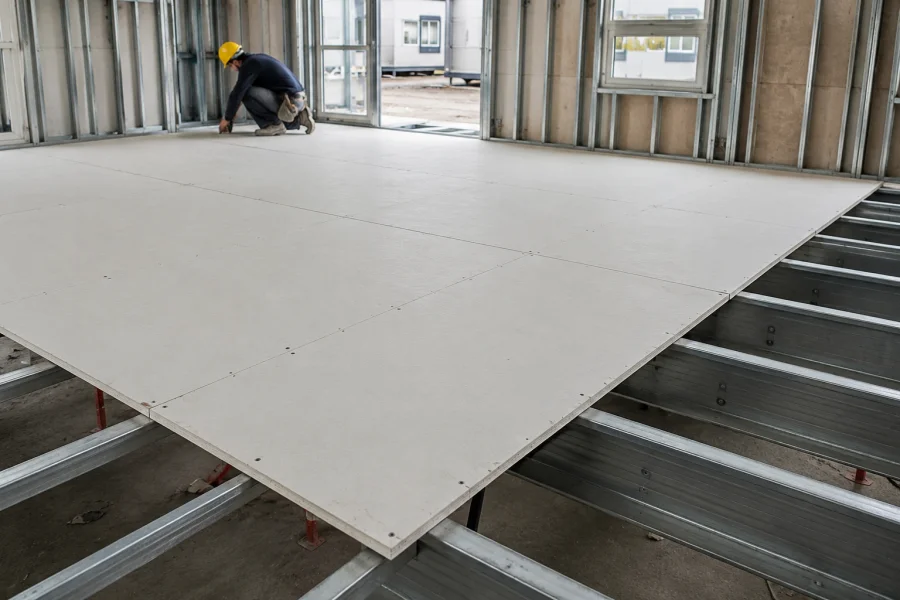
2.3 Magnesium Oxide (MgO) Board Subfloor
MgO board is a mineral-based subfloor material known for its excellent fire performance, moisture resistance, and dimensional stability. It is increasingly used in modular buildings, steel-frame systems, and projects requiring fire-rated floor assemblies.
Unlike traditional wood-based subfloors, MgO boards are non-combustible and resistant to mold, mildew, and moisture-related deformation.
Advantages
- Excellent fire resistance and flame spread performance
- Resistant to mold, mildew, and moisture
- Good dimensional stability under humidity changes
- Lighter and easier to cut than cement board
- Suitable for modular and prefabricated construction
- Compatible with underfloor heating systems
Limitations
- Higher upfront material cost
- Installation quality is important for long-term performance
- Product quality can vary between manufacturers
Best Applications
- Fire-rated flooring systems
- Modular and prefabricated buildings
- Lightweight steel-frame construction
- Multi-story residential and commercial projects
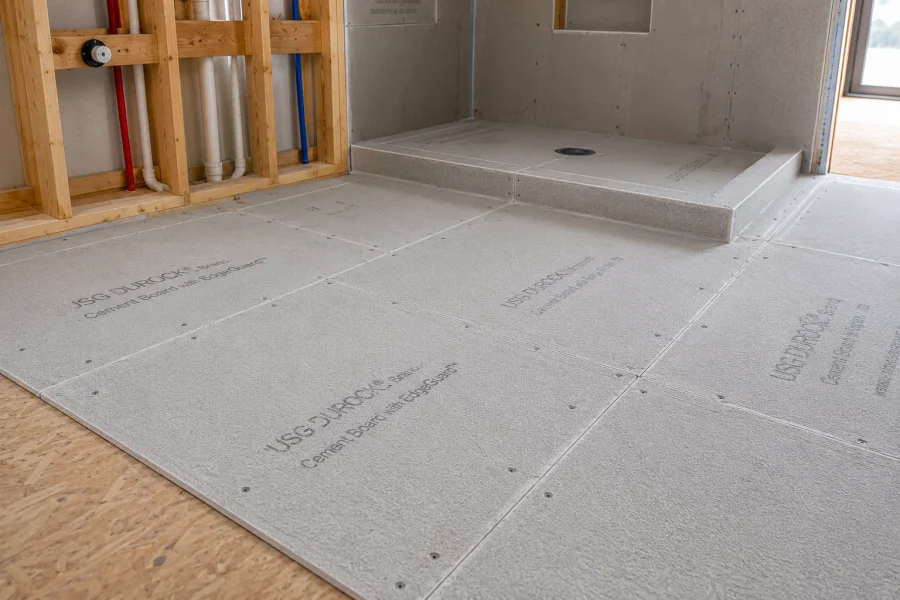
2.4 Cement Board Subfloor
Cement board is a rigid mineral-based panel made from cement and reinforcing fibers. It is commonly used in wet areas and beneath tile flooring where high moisture resistance is required.
Advantages
- Non-combustible material
- Excellent water resistance
- High compressive strength
- Performs well in wet environments
- Ideal under ceramic or stone tile systems
Limitations
- Heavy and labor-intensive to install
- More difficult to cut than MgO board
- Brittle if improperly supported
- Higher transportation and handling weight
Best Applications
- Bathrooms and wet rooms
- Tile underlayment systems
- Commercial kitchens
- Heavy-duty flooring environments
3. Performance Comparison
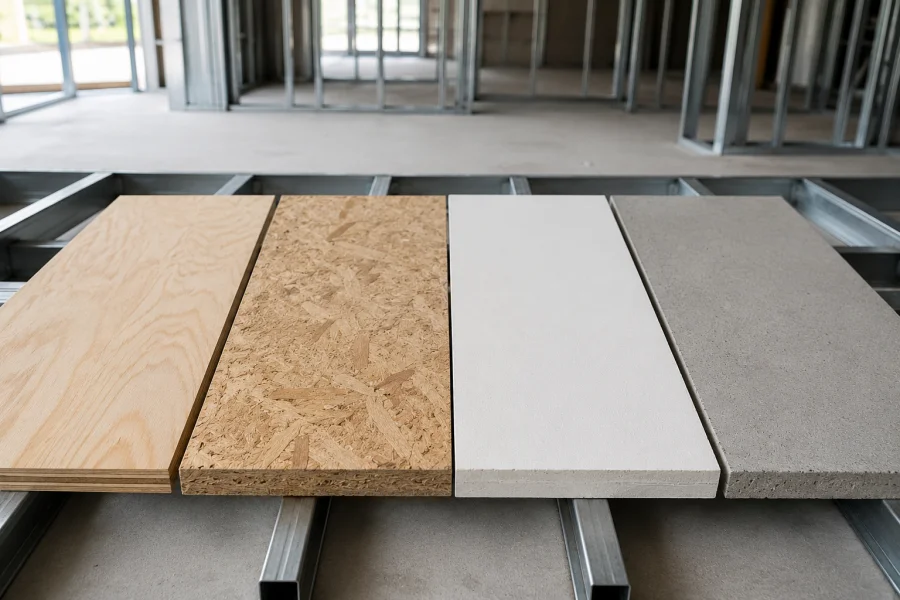
Choosing the right fire rated subfloor requires balancing fire performance, structural strength, moisture resistance, installation complexity, and long-term durability.
3.1 Comparison Table
| Material | Fire Resistance | Moisture Resistance | Weight | Ease of Installation | Typical Applications |
|---|---|---|---|---|---|
| Plywood | Low | Low | Light | Easy | Residential dry areas |
| OSB | Low-Medium | Low | Medium | Easy | Budget housing |
| MgO Board | High | High | Medium | Moderate | Fire-rated modular buildings |
| Cement Board | Very High | Very High | Heavy | Difficult | Tile and wet areas |
3.2 Fire Resistance Ratings
Plywood
Plywood is combustible and burns relatively quickly when exposed to fire. Fire-retardant treatments are often required in fire-rated assemblies.
OSB
OSB performs slightly better than untreated plywood but remains a combustible wood-based product.
MgO Board
MgO board offers excellent fire resistance and can achieve fire-rated assembly performance of one hour or more depending on thickness and system design. Its mineral composition prevents flame spread and reduces smoke generation.
Cement Board
Cement board is fully non-combustible and maintains stability under high temperatures, making it suitable for demanding fire-rated applications.
3.3 Moisture and Mold Resistance
Plywood and OSB
Both plywood and OSB are vulnerable to moisture exposure. Prolonged humidity can cause swelling, deformation, mold growth, and structural weakening.
MgO Board
MgO board provides strong resistance to moisture and mold while maintaining dimensional stability in humid conditions.
Cement Board
Cement board offers the highest level of water resistance and performs exceptionally well in continuously wet environments.
3.4 Structural Durability and Stability
Durability is critical in high-traffic flooring systems and multi-story buildings.
Plywood and OSB
Wood-based subfloors provide acceptable structural performance in residential projects but may deteriorate over time when exposed to moisture or temperature fluctuations.
MgO Board
MgO board maintains dimensional stability and resists cracking, warping, and shrinkage over long-term use.
Cement Board
Cement board provides excellent compressive strength but requires careful installation to avoid edge cracking.
3.5 Acoustic and Thermal Performance
Subfloor materials also influence sound insulation and thermal stability.
Mineral-based boards such as MgO board and cement board generally provide better acoustic performance than plywood or OSB, especially in multi-story residential buildings and modular construction systems.
MgO board is also commonly used with radiant floor heating systems due to its dimensional stability under temperature fluctuations.
4. Which Fire Rated Subfloor Is Best for Different Projects?
Different projects require different flooring priorities. Choosing the right subfloor depends on budget, fire regulations, environmental conditions, and structural requirements.
| Project Type | Recommended Material |
|---|---|
| Budget residential housing | Plywood or OSB |
| Bathrooms and wet areas | Cement board |
| Fire-rated modular construction | MgO board |
| Lightweight steel-frame systems | MgO board |
| Heavy-duty commercial flooring | Cement board |
| Multi-story residential buildings | MgO board or cement board |

Latest Posts