
Table of Contents
Ask Us Any Question
1. Introduction
Magnesium Oxide Board (commonly known as MgO board) has emerged as a versatile and high-performance material in modern construction. Its unique combination of fire resistance, dimensional stability, and environmental durability makes it increasingly popular for a variety of applications, including wall panels, flooring, and ceilings. Among its many potential uses, roofing is an area where MgO board offers particular advantages, provided that the correct type of product and installation method are chosen.
In contemporary roofing projects, materials must not only withstand extreme weather conditions such as heavy rain, high humidity, and intense sunlight but also provide long-term stability without compromising safety. Traditional roofing materials such as timber, plywood, or fiber cement boards often face limitations in terms of fire resistance, moisture susceptibility, and lifespan. MgO boards, with their inorganic composition and strong structural properties, address many of these challenges, making them a smart choice for builders and architects seeking reliable roofing solutions.
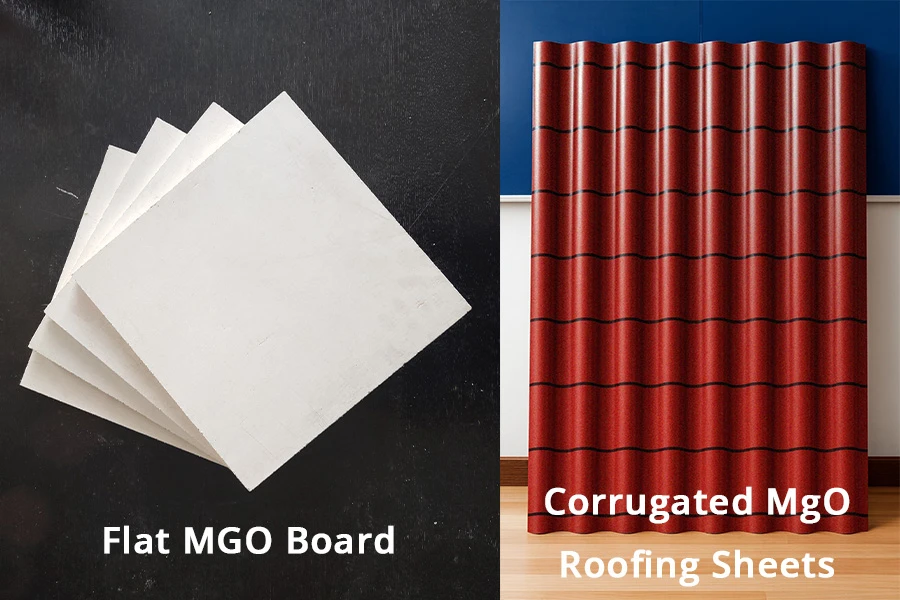
There are two main types of MgO materials suitable for roofing applications. The first is standard flat MgO board, which serves primarily as a substrate or underlayment rather than an exposed roofing surface. While it provides excellent fire resistance and structural support, it cannot be directly exposed to outdoor elements without protective finishing layers. The second type is corrugated MgO roofing sheets, which are designed specifically for direct exposure. These sheets are manufactured with an anti-aging film laminated onto the MgO board, offering waterproofing, UV resistance, and extended durability suitable for long-term roofing applications.
This article provides a comprehensive guide to using Magnesium Oxide Board for roofing, explaining the differences between the two product types, the appropriate applications for each, and step-by-step installation instructions. By understanding the characteristics and correct handling of MgO boards, builders and project managers can ensure that their roofing systems are not only safe and durable but also efficient and environmentally responsible.
2. Types of Magnesium Oxide Products Used in Roofing
When considering Magnesium Oxide Board for roofing, it is crucial to understand that not all MgO products are suitable for direct exposure to the elements. There are two primary types of MgO materials designed for roofing applications, each with distinct characteristics, advantages, and limitations.
2.1 Standard Magnesium Oxide Board (Flat MgO Board)
Standard flat MgO boards are widely used in construction due to their excellent fire resistance, dimensional stability, and durability. Composed primarily of magnesium oxide, magnesium chloride, and reinforcing fibers, these boards offer a strong, rigid structure that can serve as a substrate for roofing systems.
Key Characteristics:
-
Fire-Resistant: Being non-combustible, flat MgO boards provide an effective barrier against fire, which is especially valuable in commercial and industrial roofing projects.
-
Dimensional Stability: Flat MgO boards resist warping, swelling, or shrinkage, even under high humidity conditions, ensuring a level and secure roofing substrate.
-
Structural Support: The rigidity of MgO boards allows them to act as a stable underlayment, distributing loads evenly across the roof frame.
Limitations:
-
Not Suitable for Direct Exposure: Flat MgO boards cannot be left exposed to rain, UV light, or extreme weather conditions. Prolonged exposure can lead to surface degradation and reduced lifespan.
-
Requires Finishing Layers: To use flat MgO board in roofing, it must be covered with a protective waterproofing membrane, shingles, or corrugated sheets.
Typical Applications:
-
Serving as a roof substrate under waterproof membranes
-
Providing a fire-resistant layer in multi-layered roofing systems
-
Suitable for commercial, residential, or modular building roofs where the final roofing surface is installed on top
2.2 Corrugated Magnesium Oxide Roofing Sheets
Corrugated MgO sheets are specially designed for direct roofing applications. Unlike flat boards, these sheets are laminated with an anti-aging film, which enhances waterproofing, UV resistance, and durability. Their corrugated design also increases load-bearing capacity and provides efficient water drainage, making them ideal for long-span roofs.
Key Characteristics:
-
Direct Exposure Ready: The anti-aging film protects the MgO core from moisture, sunlight, and environmental wear, allowing these sheets to be installed as the top roofing surface.
-
Corrugated Structure: Waves in the sheet enhance strength, rigidity, and drainage, reducing the risk of water pooling.
-
Lightweight but Durable: Easier to transport and install compared to traditional concrete or metal roofing while maintaining excellent fire resistance and stability.
Advantages over Traditional Materials:
-
Comparable or better performance than fiber cement or metal sheets in terms of fire resistance and environmental stability
-
Resistant to corrosion, rot, and mold, providing long-term durability
-
Low maintenance requirements due to the protective surface coating
Typical Applications:
-
Agricultural and industrial buildings such as warehouses, barns, and factories
-
Residential or commercial roofs where lightweight, durable, and fire-resistant roofing is desired
-
Renovation projects requiring replacement of old roofing with eco-friendly alternatives
2.3 Summary
Understanding the differences between flat MgO boards and corrugated MgO roofing sheets is essential for selecting the right product for your project. Flat boards are ideal as a substrate, offering fire resistance and structural stability but require protective finishing layers. Corrugated sheets, on the other hand, are suitable for direct outdoor exposure and provide both durability and weather resistance. Choosing the correct MgO product ensures that the roofing system achieves maximum lifespan, safety, and performance.
3. When to Use Each Type of MgO Roofing Material
Choosing the correct type of Magnesium Oxide (MgO) roofing material is critical to ensuring the durability, safety, and performance of your roof. Both flat MgO boards and corrugated MgO roofing sheets have unique strengths and limitations, which determine their suitability for specific applications.
3.1 Using Flat MgO Board as a Roofing Substrate
Flat MgO boards are primarily designed to function as a roof substrate or underlayment, providing a stable, fire-resistant base for roofing membranes or other finishing materials. Although they cannot withstand direct outdoor exposure, their structural and fire-resistant properties make them an excellent choice for layered roofing systems.
Ideal Scenarios:
-
Commercial Roofs: Flat MgO boards can serve as a substrate under waterproof membranes for office buildings, malls, and industrial facilities. Their fire-resistant properties add an extra layer of safety to multi-story constructions.
-
Residential Roof Decks: In homes, flat MgO boards can be used beneath tiles, shingles, or corrugated sheets, offering dimensional stability and protection from potential fire hazards.
-
Prefabricated or Modular Buildings: These boards are lightweight yet strong, making them suitable for modular construction where roof panels need to be installed quickly without compromising durability.
Key Considerations:
-
Always cover the flat board with a waterproof membrane or corrugated sheet before exposing it to outdoor conditions.
-
Ensure proper joint spacing and fasteners to prevent warping or movement.
-
Use flat MgO boards in combination with other roofing layers to maximize fire resistance and longevity.
3.2 Using Corrugated MgO Roofing Sheets as the Actual Roofing Surface
Corrugated MgO sheets are engineered for direct exposure to weather. Their anti-aging film and corrugated structure provide waterproofing, UV protection, and structural strength, making them suitable for long-term roofing applications.
Ideal Scenarios:
-
Agricultural Buildings: Warehouses, barns, and storage sheds benefit from the lightweight, durable, and corrosion-resistant properties of corrugated MgO sheets.
-
Industrial Roofs: Factories and workshops often require fire-resistant roofing materials that can withstand direct exposure to sunlight and rain. Corrugated MgO sheets provide a practical and safe solution.
-
Residential and Commercial Roofs: For regions where lightweight and eco-friendly roofing is preferred, corrugated MgO sheets offer excellent durability and weather resistance, especially in areas prone to high humidity or UV exposure.
Key Considerations:
-
Ensure the anti-aging film remains intact during installation to maintain waterproofing and UV protection.
-
Proper alignment, overlap, and fastening are essential to prevent water infiltration and stress cracks.
-
Regular inspection is recommended to maintain longevity, especially in harsh weather regions.
3.3 Summary
Selecting the right MgO roofing material depends on exposure conditions, structural requirements, and the intended function of the roof. Flat MgO boards excel as substrates beneath protective layers, providing fire resistance and structural stability. Corrugated MgO roofing sheets, designed for direct exposure, offer waterproofing, UV protection, and long-term durability. Understanding these distinctions ensures that the chosen material not only meets safety and performance standards but also maximizes the lifespan of the roofing system.
4. Installation Guide for Flat MgO Board (as Roof Substrate)
Flat Magnesium Oxide (MgO) boards are primarily used as a roof substrate or underlayment. Proper installation is essential to ensure stability, fire resistance, and long-term durability. While these boards cannot be exposed directly to outdoor weather, correct handling, cutting, fastening, and finishing will create a secure foundation for the final roofing material.
4.1 Preparation
Before installation, careful planning and preparation are crucial:
-
Board Thickness: Select boards according to structural requirements. Common thicknesses for roofing substrates range from 10 mm to 16 mm, depending on load and span.
-
Supporting Structure: Ensure the roof frame (steel joists, wood trusses, or purlins) is properly aligned and structurally sound. The support spacing should match board specifications to prevent sagging or movement.
-
Storage: Keep MgO boards dry and flat before installation. Avoid stacking them directly on wet surfaces or exposing them to rain or sunlight.
4.2 Cutting and Handling
MgO boards can be cut and shaped on-site, but care must be taken to avoid cracks or chipping:
-
Tools: Score-and-snap tools, hand saws, or electric saws with fine-toothed blades are recommended. Avoid aggressive cutting that may damage the board edges.
-
Edge Sealing: Apply a moisture-resistant sealant to cut edges to prevent water infiltration, especially in humid climates.
-
Safety: Wear protective gloves and masks to prevent dust inhalation and skin irritation.
4.3 Fixing and Fastening
Proper fastening is critical to maintain roof integrity:
-
Fasteners: Use corrosion-resistant screws suitable for MgO boards and the underlying frame. Stainless steel or galvanized screws are recommended.
-
Board Spacing: Maintain a 2–3 mm gap between boards to accommodate expansion and contraction.
-
Installation Pattern: Stagger board joints to enhance structural stability and reduce potential weak points.
4.4 Applying the Roofing Membrane or Finishing Layer
Since flat MgO boards cannot be left exposed, the installation must be completed with a protective roofing layer:
-
Compatible Membranes: EPDM or PVC can be applied directly over the MgO substrate.
-
Adhesion and Overlaps: Ensure membranes are properly bonded to the substrate and that overlaps are sealed to prevent water infiltration.
-
Finishing: If additional layers such as shingles or corrugated sheets are used, follow manufacturer instructions for spacing and fastening.
4.5 Key Do’s and Don’ts
Do:
-
Keep boards dry during installation.
-
Use proper fasteners and maintain gaps between boards.
-
Apply protective membranes promptly.
Don’t:
-
Leave boards exposed to rain or sunlight.
-
Step on unsupported areas of the board to avoid cracking.
-
Ignore manufacturer guidelines for thickness and support spacing.
4.6 Summary
Installing flat MgO boards as a roofing substrate requires careful preparation, cutting, and fastening. When properly installed and covered with a protective membrane, MgO boards provide a stable, fire-resistant base for roofing systems, ensuring long-term performance and durability. This preparation is essential before installing the top roofing material, whether it is shingles, tiles, or corrugated sheets.
5. Installation Guide for Corrugated MgO Roofing Sheets
Corrugated Magnesium Oxide (MgO) roofing sheets are designed for direct outdoor exposure, providing both structural support and weather resistance. Proper installation ensures maximum durability, waterproofing, and protection from UV degradation. This section outlines step-by-step guidance for installing corrugated MgO roofing sheets safely and effectively.
5.1 Material Preparation
Before installation, check and prepare the materials carefully:
-
Sheet Thickness and Wave Height: Select the appropriate thickness and corrugation profile according to the span and load requirements.
-
Anti-Aging Film Inspection: Ensure the protective anti-aging film on each sheet is intact to guarantee UV and waterproofing performance.
-
Supporting Purlins: Verify spacing and alignment of purlins or joists to match the corrugated sheet specifications. Proper support reduces the risk of sagging or cracking.
5.2 Cutting and Drilling
Corrugated MgO sheets can be cut and drilled on-site, but care must be taken to maintain integrity:
-
Tools: Use circular saws with carbide-tipped blades or specialized cutting tools for corrugated boards. Avoid aggressive cutting that may cause cracks or chips.
-
Drilling Holes: Pre-drill screw holes to prevent stress fractures along the corrugations. Avoid overtightening screws, which can damage the sheet.
5.3 Fastening the Sheets
Correct fastening is crucial for waterproofing and wind resistance:
-
Fasteners: Use roofing screws with rubber or plastic caps to secure sheets without compromising waterproofing. Stainless steel or galvanized screws are recommended.
-
Side and End Laps: Maintain proper overlap between adjacent sheets (typically 100–150 mm side lap and 200 mm end lap) to prevent water infiltration.
-
Installation Sequence: Start from the lower edge of the roof and work upward, ensuring corrugations are aligned with roof slope for optimal water drainage.
5.4 Waterproofing and Detailing
Attention to detail ensures long-term performance:
-
Ridge Caps and Flashing: Install ridge caps, valley flashing, and gutter connections to prevent leaks.
-
Sealing Joints: Apply sealant at overlaps or around penetrations (vent pipes, skylights) to maintain waterproofing integrity.
-
Preserve Anti-Aging Film: Avoid scratching or removing the protective film during installation, as it provides UV and weather resistance.
5.5 Installation Safety Notes
Working on roofs carries inherent risks, and proper precautions are essential:
-
Walking Path: Only walk on purlins or pre-reinforced areas to prevent sheet cracking.
-
Storage Before Use: Store sheets flat and covered, avoiding prolonged sun or rain exposure.
-
Handling: Use gloves and safety gear to prevent cuts, dust inhalation, and falls.
5.6 Summary
Corrugated MgO roofing sheets provide a durable, weather-resistant, and fire-safe roofing solution when installed correctly. Careful attention to material preparation, cutting, fastening, and waterproofing details ensures long-term performance. By following these guidelines, builders can maximize the lifespan of corrugated MgO roofs while maintaining safety and structural integrity.
6. Performance Comparison: Flat MgO Roofing vs. Corrugated MgO Roofing
Selecting the right type of Magnesium Oxide (MgO) material for roofing not only depends on application but also on the desired performance characteristics. While both flat MgO boards (substrates) and corrugated MgO sheets share core advantages, their performance in key areas differs significantly. Understanding these differences ensures that the roofing system meets safety, durability, and maintenance requirements.
6.1 Fire Resistance
-
Flat MgO Board: Offers excellent fire resistance as a substrate layer. Being non-combustible, it enhances overall roof safety when combined with other roofing materials.
-
Corrugated MgO Sheets: Provide direct fire-resistant protection for the exposed roof. The anti-aging film does not compromise fire resistance, making corrugated sheets suitable for industrial and agricultural buildings.
6.2 Structural Stability and Load-Bearing Capacity
-
Flat MgO Board: Acts as a rigid underlayment that distributes loads evenly across supporting joists. It is ideal for roofs where additional layers (tiles, shingles, membranes) bear the majority of the load.
-
Corrugated MgO Sheets: The corrugated profile enhances rigidity and load-bearing capacity, allowing the sheets to support their own weight and resist wind uplift over long spans without additional structural reinforcement.
6.3 Moisture and Weather Resistance
-
Flat MgO Board: Cannot be exposed directly to rain, UV light, or extreme temperatures. When covered with a membrane or secondary roofing layer, it provides long-term moisture protection.
-
Corrugated MgO Sheets: Laminated with an anti-aging film, these sheets are directly waterproof and UV-resistant, suitable for outdoor exposure over many years without degradation.
6.4 Durability and Maintenance
-
Flat MgO Board: With proper membrane coverage, it has a long service life with minimal maintenance. However, improper covering or prolonged exposure to moisture can reduce its lifespan.
-
Corrugated MgO Sheets: Offer low-maintenance durability due to their composite structure. The anti-aging film protects against weathering, mold, and corrosion, reducing long-term upkeep requirements.
6.5 Installation Flexibility
-
Flat MgO Board: Requires precise installation as a substrate, with joint spacing, fasteners, and protective membrane considerations. Installation is slightly more labor-intensive due to the need for additional finishing layers.
-
Corrugated MgO Sheets: Easier and faster to install as the final roofing layer, but care must be taken to maintain overlaps, fastener integrity, and anti-aging film protection.
6.6 Summary Table
| Performance Aspect | Flat MgO Board (Substrate) | Corrugated MgO Sheets (Exposed) |
|---|---|---|
| Fire Resistance | Excellent as substrate layer | Excellent for direct exposure |
| Load-Bearing Capacity | Supports roof deck layers | Supports own weight + roof load |
| Moisture Resistance | Needs membrane covering | Directly waterproof |
| UV Resistance | Not UV resistant | Anti-aging film provides UV protection |
| Maintenance | Low if covered | Very low maintenance |
| Installation Complexity | Medium | Relatively easy |
6.7 Conclusion
Both flat MgO boards and corrugated MgO sheets offer exceptional fire resistance and structural performance, but their applications differ. Flat MgO boards are ideal as a protected substrate, while corrugated MgO sheets excel as exposed roofing materials with built-in waterproofing and UV resistance. Selecting the correct product based on these performance characteristics ensures a durable, safe, and long-lasting roofing system.
7. Advantages of Using MgO Materials in Roofing Systems
Magnesium Oxide (MgO) materials have become increasingly popular in roofing due to their unique combination of fire resistance, durability, environmental safety, and ease of installation. Whether used as a substrate or as a corrugated roofing sheet, MgO products provide several advantages over traditional roofing materials like plywood, fiber cement, or metal sheets.
7.1 Superior Fire Resistance
One of the most significant benefits of MgO boards is their inorganic, non-combustible composition, which offers high fire resistance. This property is crucial for protecting residential, commercial, and industrial buildings from fire hazards. Unlike timber or some composite materials, MgO boards do not ignite, do not release toxic smoke, and help contain fires, providing additional time for evacuation and reducing property damage.
7.2 Dimensional Stability
MgO boards maintain their shape and strength under extreme environmental conditions, including high humidity, heavy rainfall, and temperature fluctuations. Unlike wood or plywood, MgO boards resist warping, swelling, and shrinkage, ensuring a level and secure roofing surface over time. This dimensional stability is particularly valuable in tropical or coastal regions where moisture levels are high.
7.3 Moisture and Mold Resistance
Both flat MgO boards (when covered) and corrugated MgO sheets (with anti-aging film) provide excellent resistance to moisture penetration. This prevents common roofing issues such as mold growth, rot, and decay, which are often encountered with traditional wood or fiber cement materials. By resisting water damage, MgO roofing materials contribute to a longer lifespan and lower maintenance costs.
7.4 Lightweight and Easy to Install
MgO boards are relatively lightweight compared to traditional roofing materials such as concrete or metal sheets. This reduces the load on roof structures, making installation easier and faster. The lighter weight also enables safer handling on-site, reduces transportation costs, and allows for quicker construction timelines.
7.5 Environmental and Health Benefits
MgO boards are eco-friendly and non-toxic. They do not contain harmful chemicals, flame retardants, or volatile organic compounds (VOCs), making them safe for both workers during installation and building occupants. The use of MgO also contributes to sustainable construction practices, as the boards are often made from natural minerals and are recyclable at the end of their service life.
7.6 Versatility in Roofing Applications
MgO boards can be adapted to various roofing systems:
-
Flat MgO boards serve as substrates for waterproof membranes, shingles, or tiles.
-
Corrugated MgO sheets can be installed as exposed roofing, directly resisting environmental stressors.
-
The flexibility in use allows builders and architects to design customized roofing solutions while maintaining fire safety, durability, and moisture protection.
7.7 Low Maintenance and Longevity
Both types of MgO roofing materials require minimal maintenance. Corrugated sheets with anti-aging film maintain waterproofing and UV resistance for years, while flat boards protected by membranes provide a stable foundation with long-term durability. Overall, MgO roofs deliver reliable performance with reduced upkeep compared to conventional roofing materials.
7.8 Summary
Using Magnesium Oxide materials in roofing systems combines fire safety, moisture resistance, environmental friendliness, and structural stability in a single solution. Whether applied as a substrate or as a corrugated roof sheet, MgO boards offer superior performance and longevity, making them an ideal choice for modern construction projects seeking durability, safety, and sustainability.
8. Limitations and Precautions
While Magnesium Oxide (MgO) materials offer numerous advantages for roofing applications, understanding their limitations and proper handling requirements is essential to ensure safety, durability, and long-term performance. Both flat MgO boards and corrugated MgO roofing sheets require specific precautions to maximize their lifespan and maintain structural integrity.
8.1 Limitations of Flat MgO Boards
-
Cannot Be Exposed to Weather: Flat MgO boards are not designed for direct outdoor exposure. Rain, sunlight, or prolonged humidity can degrade the surface, reducing fire resistance and structural stability.
-
Requires Protective Layers: To perform effectively in roofing systems, flat MgO boards must be covered with waterproof membranes, shingles, or other finishing layers. Failing to install a protective layer compromises performance.
-
Load Limitations: While structurally stable, flat boards primarily serve as substrates. They are not intended to bear heavy loads directly, unlike corrugated sheets.
8.2 Limitations of Corrugated MgO Roofing Sheets
-
Impact Sensitivity: Although durable, corrugated MgO sheets can crack under excessive localized impact. Careful handling during transportation and installation is crucial.
-
Surface Protection: The anti-aging film provides waterproofing and UV resistance, but scratches or damage during installation can reduce effectiveness.
-
Fastening Considerations: Improper screw placement or over-tightening can cause cracks or compromise water resistance.
8.3 General Precautions for Both Types
-
Storage: Store boards flat, off the ground, and under cover to prevent warping, moisture absorption, or UV damage before installation.
-
Cutting and Handling: Use appropriate tools to minimize dust, prevent cracks, and avoid edge chipping. Protective gloves, masks, and eye protection are recommended.
-
Installation Sequence: Follow manufacturer guidelines for fastener spacing, joint gaps, overlaps, and support structures to ensure structural integrity.
-
Weather Conditions: Avoid installing MgO boards during heavy rain, extreme humidity, or freezing conditions to prevent damage or improper adhesion of membranes.
-
Regular Inspection: Especially for corrugated sheets, periodic inspection of overlaps, fasteners, and anti-aging surfaces ensures long-term performance.
8.4 Summary
By understanding the limitations and precautions associated with both flat MgO boards and corrugated roofing sheets, builders can prevent common installation errors and extend the lifespan of the roofing system. Proper storage, handling, installation, and maintenance are key to ensuring that MgO roofs remain fire-resistant, durable, and waterproof for decades.
9. Conclusion
Magnesium Oxide (MgO) boards have proven to be versatile, durable, and fire-resistant materials for modern roofing applications. Their unique combination of structural stability, moisture resistance, and environmental friendliness makes them an excellent choice for both commercial and residential roofing projects.
This article has highlighted the two main types of MgO roofing products: flat MgO boards and corrugated MgO roofing sheets. Flat boards are ideal as a substrate, providing a stable, fire-resistant base for membranes or other finishing layers. They require protective coverage and careful installation to ensure optimal performance. Corrugated MgO sheets, on the other hand, are designed for direct outdoor exposure. Laminated with an anti-aging film, they offer waterproofing, UV protection, and long-term durability, making them suitable as the exposed roofing surface for industrial, agricultural, or residential buildings.
Proper installation is key to maximizing the benefits of MgO boards. For flat boards, this includes careful cutting, correct fastener placement, and immediate application of protective membranes. For corrugated sheets, correct alignment, overlap, fastening, and preservation of the anti-aging film are essential to maintain waterproofing and structural integrity.
MgO roofing materials offer numerous advantages over traditional roofing options, including superior fire resistance, dimensional stability, mold and rot resistance, lightweight handling, and low maintenance. However, understanding their limitations and adhering to proper installation guidelines ensures that these materials deliver long-term performance and safety.
In conclusion, whether used as a substrate or as a corrugated roofing sheet, Magnesium Oxide Board provides an eco-friendly, reliable, and high-performance solution for modern roofing systems. By selecting the appropriate type of MgO board and following proper installation practices, builders and architects can create roofs that are safe, durable, and sustainable, meeting the demands of both contemporary construction standards and environmental considerations.
Learn how to properly install MgO boards for walls, ceilings, and flooring. This step-by-step guide covers cutting, fastening, joint treatment, etc.
Discover how MgO board performs in bathrooms and kitchens. Learn about moisture resistance, fire safety, mold prevention, and installation practices.
Explore Russia’s growing demand for MgO board in 2026. Learn about key applications, fire-safe performance, and market opportunities.
