
Table of Contents
Ask Us Any Question
1. Not All MgO Boards Are the Same
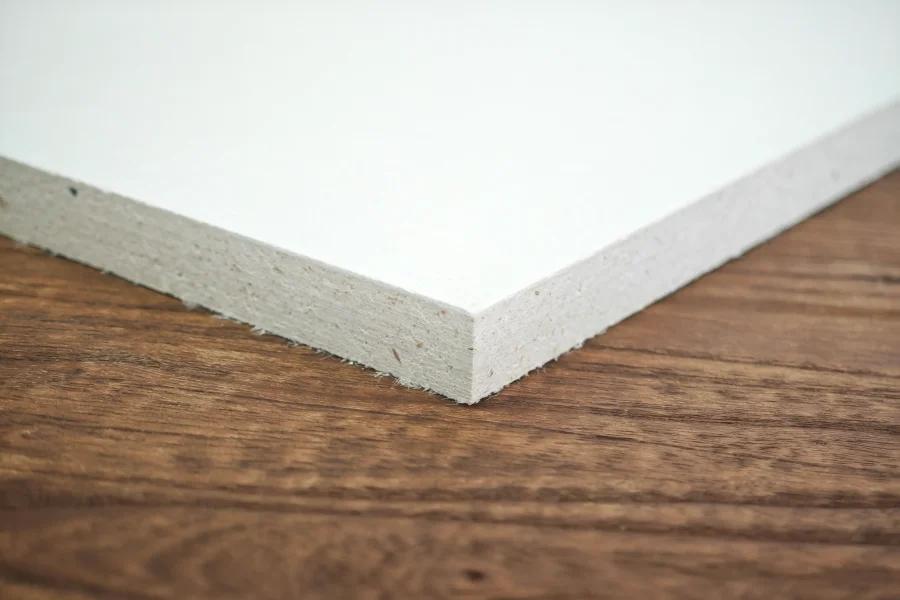
Magnesium oxide boards (MgO boards) are widely used in modern construction for their fire resistance, moisture tolerance, and eco-friendly properties. But not all MgO boards are created equal. Among the most common types, magnesium sulfate (MgSO₄) boards and magnesium chloride (MgCl₂) boards may look similar at first glance—but their chemical composition, application, and long-term performance can differ dramatically.
Choosing the wrong type for your project can lead to issues like moisture damage, metal corrosion, or unexpected maintenance costs. For builders, architects, and project managers, understanding these differences is essential for making informed decisions that ensure safety, efficiency, and long-lasting quality.
In the sections below, we’ll explore what sets MgSO₄ and MgCl₂ boards apart, their practical applications, and which option is better suited for your specific construction needs.
2. What Is Magnesium Sulfate Board (MgSO₄ Board)
Magnesium sulfate board, also known as MgSO₄ board, is a high-performance, non-toxic, and fire-resistant panel widely used in modern construction. Its unique chemical stability and moisture tolerance make it a top choice for projects requiring long-lasting durability and safety. Unlike magnesium chloride boards, MgSO₄ boards are naturally free of chloride ions, which helps prevent corrosion when used with metal fasteners or frames.
2.1 Composition
Magnesium sulfate board is primarily made of:
-
Magnesium oxide (MgO): Provides strength and fire resistance.
-
Magnesium sulfate (MgSO₄): Stabilizes the panel and reduces reactivity.
-
Perlite, sawdust, fiberglass mesh, non-woven fabric.
2.2 Applications
MgSO₄ board is versatile and suitable for a range of construction uses:
-
Subflooring: Provides a stable, moisture-resistant base for flooring materials.
-
Wall linings and partition panels: Ideal for interior walls in humid or coastal areas.
-
Ceilings: Fire-resistant panels for residential and commercial buildings.
- 👉️ See magnesium sulfate boards of various applications
2.3 Key Characteristics
-
Non-corrosive: No risk of chloride-induced corrosion on metal fasteners or embedded steel.
-
Moisture-resistant: Performs well in humid conditions without warping or swelling.
-
Fire-resistant: Meets Class A fire rating under most global standards.
-
Environmentally friendly: Free of halogens, asbestos, and formaldehyde.
-
Low alkalinity: Minimizes reactivity with other building materials.
-
Versatile: Suitable for both internal and semi-external applications.
3. What Is Magnesium Chloride Board (MgCl₂ Board)
Magnesium chloride board, or MgCl₂ board, is another widely used type of magnesium oxide panel. In fact, chloride-based MgO boards were the earliest to appear on the market and have been used in construction for many years, with a long history of development and practical application. Known for its fire resistance, lightweight, and cost-effectiveness, MgCl₂ board has become a staple material in a wide range of building projects around the world.
However, its chloride content introduces certain considerations, particularly regarding moisture sensitivity and compatibility with metal components. Understanding these factors is crucial for ensuring long-term performance.
3.1 Composition
MgCl₂ board is typically composed of:
-
Magnesium oxide (MgO): Provides structural strength and fire resistance.
-
Magnesium chloride (MgCl₂): Acts as a binder but can cause corrosion if excess chlorides remain.
-
Perlite, sawdust, fiberglass mesh, non-woven fabric.
3.2 Applications
MgCl₂ board is widely applied in interior construction projects, especially where controlled environmental conditions exist:
-
Interior walls and partitions: Suitable for dry interior areas.
-
Ceilings: Provides fire resistance while allowing easy finishing with paints or laminates.
-
Subflooring: Can be used in low-humidity environments.
-
Decorative panels: Ideal for applications requiring lamination or aesthetic finishes. When properly treated, MgCl₂ board performs reliably, but careful installation is essential in humid or coastal regions.
3.3 Key Characteristics
-
Fire-resistant: Meets Class A fire rating and maintains integrity under high temperatures.
-
Lightweight and workable: Easy to cut, shape, and install on-site.
-
Cost-effective: Generally more affordable than MgSO₄ board.
-
Surface treatment compatibility: Often laminates well with PVC films or decorative finishes.
3.4 Potential Problems
In recent years, concerns about chloride-related issues in magnesium chloride boards have drawn attention in the construction industry. These problems are usually not caused by the material itself, but by poorly manufactured boards that contain excessive free chloride ions. When chloride levels are not properly controlled during production, the ions can migrate within the board and attract moisture, which may lead to problems such as:
-
Corrosion of metal fasteners or embedded steel
-
Surface moisture accumulation, sometimes referred to as “sweating” or “crying” boards
-
Reduced stability in high-humidity environments over long periods
To prevent these issues, modern manufacturers use additional processing methods to control chloride content. Suparna, an experienced MgO board manufacturer in China, applies a soaking technique during the production of magnesium chloride boards.
This process helps remove excess free chlorides before the board is fully cured, significantly reducing the risk of corrosion and moisture-related problems. With proper treatment and quality control, chloride-based boards can perform reliably in a wide range of interior applications.
4. Key Differences Between MgSO₄ Board and MgCl₂ Board
While both MgSO₄ board and MgCl₂ board are types of magnesium oxide boards, they differ in composition, performance, and suitability for various applications. Understanding these differences helps builders, architects, and distributors choose the right board for their projects.
4.1 Moisture Resistance
-
MgSO₄ board: Naturally chloride-free, highly resistant to moisture. Maintains shape and strength even in humid or coastal environments.
-
MgCl₂ board: Contains chloride ions that attract moisture. Soaking reduces this risk, but long-term exposure in high-humidity areas can still cause surface sweating or minor swelling.
4.2 Corrosion Risk
-
MgSO₄ board: No chloride ions, eliminating the risk of corrosion on metal fasteners or frames. Ideal for projects with metal integration.
-
MgCl₂ board: Chlorides can corrode steel or aluminum if not properly treated. Soaking techniques help, but caution is still required in metal-framed constructions.
4.3 Compatibility with Finishing Materials
-
MgSO₄ board: Works well with paints, adhesives, PVC films, and laminates due to its stable, chloride-free composition.
-
MgCl₂ board: May occasionally react with sensitive coatings if residual chlorides remain, causing minor adhesion issues or staining.
4.4 Long-Term Durability and Maintenance
-
MgSO₄ board: Less maintenance needed over the building’s lifespan thanks to stability under fluctuating humidity and temperature.
-
MgCl₂ board: Can perform well initially, but higher maintenance may be required in challenging environments due to moisture sensitivity.
4.5 Environmental and Cost Considerations
-
MgSO₄ board: More environmentally friendly; avoids chloride-related repairs and chemical treatments. Slightly higher upfront cost is offset by long-term performance.
-
MgCl₂ board: Lower initial cost, but potential maintenance can reduce cost advantage over time.
| Feature | Magnesium Sulfate Board | Magnesium Chloride Board |
|---|---|---|
| Binder type | Magnesium sulfate | Magnesium chloride |
| Chloride content | Chloride-free | Contains chloride ions |
| Corrosion risk | No corrosion risk | Possible if poorly manufactured |
| Moisture resistance | Excellent | Good after proper soaking |
| Sweating / crying board risk | None | May occur in low-quality boards |
| Compatibility with metal | Excellent | Requires chloride control |
| Compatibility with PVC / laminate | Good | Very good, widely used for lamination |
| Cost | Slightly higher | Usually lower |
5. Performance in Real Applications
Understanding how MgSO₄ board and MgCl₂ board perform in real construction projects is key to making informed decisions. Laboratory data provides a controlled perspective, but real-world conditions—such as humidity, temperature fluctuations, and contact with metal—can reveal subtle yet important differences.
5.1 Humidity and Coastal Environments
-
MgSO₄ board: Its chloride-free composition ensures excellent stability in high-humidity or coastal areas. Metal fasteners, screws, and frames remain corrosion-free, and walls or ceilings retain their shape without warping.
-
MgCl₂ board: Even after soaking, prolonged exposure to moisture can cause surface sweating. While this rarely affects structural integrity if properly installed, additional maintenance may be required over time.
5.2 Fire Safety Performance
Both boards offer strong fire resistance due to magnesium oxide’s inherent properties. Tests simulating high temperatures show that MgSO₄ and MgCl₂ boards can withstand fire without rapid degradation or structural collapse. For builders, this makes both options suitable for interior walls, ceilings, and subflooring where fire safety is a priority.
5.3 Installation and Handling
-
MgSO₄ board: Slightly more forgiving during installation, less sensitive to water, easy to cut and shape using standard tools.
-
MgCl₂ board: Requires careful handling, especially in pre-soaked areas, to avoid moisture-related issues that could temporarily affect workability or surface finish.
6. Common Misunderstandings About MgO, MgSO₄, and MgCl₂ Boards
Despite the growing popularity of magnesium-based boards, there is still confusion in the construction market about the terms MgO board, MgSO₄ board, and MgCl₂ board. Understanding these differences is important for selecting the right material for each project.
6.1 MgO Board Is a General Term
Many people assume that MgO board refers to a specific formula, but in reality, it is a general name for boards made primarily from magnesium oxide. Both MgSO₄ boards and MgCl₂ boards belong to the MgO board category, even though their binders and performance characteristics differ.
6.2 Fire Resistance Is Similar, but Durability Is Not
Both MgSO₄ and MgCl₂ boards offer excellent fire resistance, which is one reason they are widely used in modern construction. However, moisture resistance, corrosion risk, and long-term stability are not identical. MgSO₄ boards are naturally chloride-free, while MgCl₂ boards require proper soaking treatment to achieve similar reliability.
6.3 Chloride Content Does Not Always Mean Poor Quality
Some buyers believe MgCl₂ boards are always inferior, which is not accurate. When manufactured correctly and treated with proper soaking processes, MgCl₂ boards can perform very well in standard interior environments.
6.4 Compatibility with Finishing Materials Matters
Another common misunderstanding is that all MgO boards behave the same when laminated, painted, or coated. In reality:
-
MgSO₄ board is more chemically stable and works well with sensitive finishes.
-
MgCl₂ board can also laminate well, especially with PVC films, but requires controlled production to avoid surface reactions.
Choosing the right type depends on the environment, structure, and finishing materials used in the project.
7. Which One Should You Choose?
Both MgSO₄ board and MgCl₂ board are reliable magnesium oxide panels, but the better choice depends on the project requirements, environment, and budget.
Choose MgSO₄ board when:
-
The project is located in humid or coastal areas
-
Metal framing or fasteners are heavily used
-
Long-term durability is critical
-
Maintenance must be minimized
-
High-end or fire-rated construction is required
Choose MgCl₂ board when:
-
The project is indoors with controlled humidity
-
Budget is an important factor
-
Properly soaked boards are available
-
PVC lamination or decorative finishes are needed
-
Installation conditions are stable
In modern construction, the goal is not to choose the cheapest board, but to choose the right board for the right environment.
8. FAQ About MgSO₄ Board vs MgCl₂ Board
8.1 Are MgSO₄ boards stronger than MgCl₂ boards?
Both boards can achieve similar strength levels when properly manufactured. The main difference is not strength, but stability in humid or corrosive environments.
8.2 Do MgCl₂ boards always cause corrosion?
No. Corrosion risks mainly occur when excess chloride remains in the board. Proper soaking and quality control significantly reduce this risk.
8.3 Which board is better for subflooring?
Both can be used, but MgSO₄ board is generally preferred in humid or coastal areas, while MgCl₂ board can work well in dry interior conditions.
8.4 Can MgO boards be used with steel framing?
Yes, but chloride-free MgSO₄ boards are safer for long-term use with metal structures.
8.5 Is MgSO₄ board more expensive?
In some markets, yes. However, the higher stability and lower maintenance often make it more cost-effective over the lifetime of the building.
Need Help Choosing the Right MgO Board?
If you are selecting between magnesium sulfate board and magnesium chloride board, it is important to work with an experienced manufacturer who understands the differences in real construction conditions. Suparna specializes in producing high-quality MgO boards for subflooring, wall panels, ceilings, SIP panels, and fire-rated systems.
Contact us to get expert advice or request a free sample. We will reply within 24 hours on business days.
Explore the best heat proof and heat resistant materials for safer construction. Learn their benefits, applications, and safety advantages.
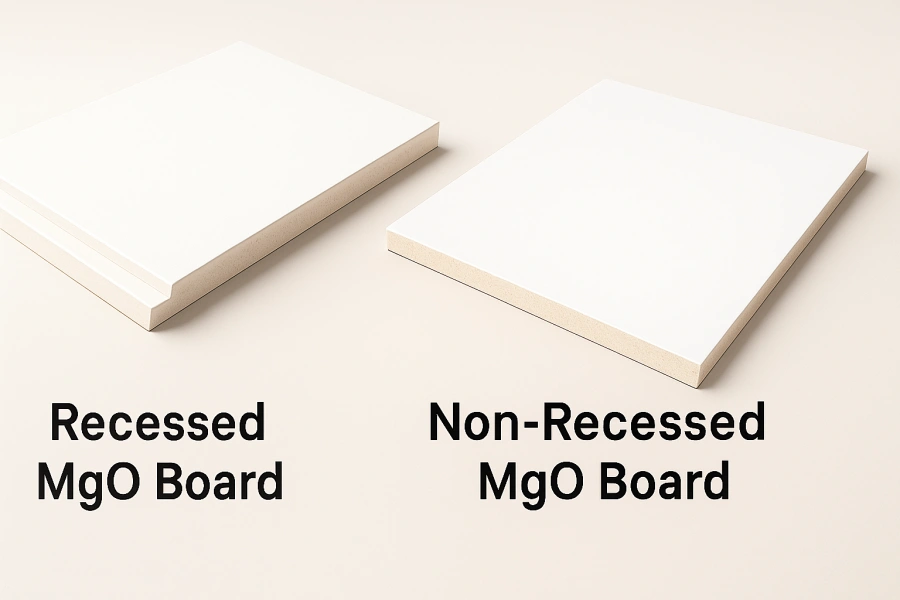
Compare recessed vs non-recessed MgO boards. Learn features, applications, and tips to choose the right fire- and moisture-resistant board.
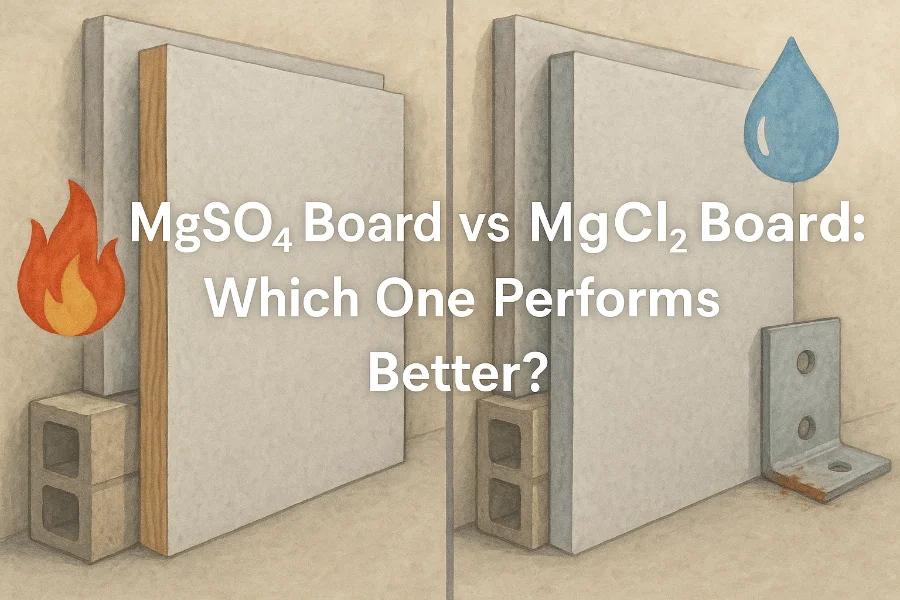
Compare MgSO4 board vs MgCl2 board: discover key differences, performance, and durability to choose the best mgo board for your project.
