
Table of Contents
Ask Us Any Question
1. Introduction
1.1 A Tragic Reminder of Fire Safety
The tragic fire at the Tai Po Apartment Complex in Hong Kong on November 26, 2025, serves as a stark reminder of the importance of fire safety in high-rise residential buildings. The fire, classified as a Level 5 alarm—the highest in Hong Kong’s fire system—rapidly engulfed seven of the eight buildings in the complex. By the morning of November 28, four buildings had been fully extinguished, while the fire in the remaining three was under control. The disaster resulted in at least 94 fatalities, including one firefighter who died in the line of duty, and left 76 people injured.
1.2 About the Tai Po Apartment Complex
The Tai Po Apartment Complex, also known as Wang Fuk Court, consists of eight residential buildings with a total of 1,984 units, housing approximately 4,643 residents, a significant portion of whom are elderly. At the time of the fire, the complex was undergoing extensive maintenance, including exterior wall renovations and repairs. This tragic event underscores the critical need for effective fire prevention measures, from building design and construction materials to emergency response systems.
2. Overview of the Fire
2.1 Timeline and Impact
The fire at the Tai Po Apartment Complex began on November 26, 2025, at around 2:51 p.m., originating from a protective net outside Hong Cheung House. The flames quickly spread to seven of the eight buildings in the complex, fueled by exterior scaffolding, protective nets, and construction materials. By the morning of November 28, four buildings had been fully extinguished, while the remaining three were under control.
2.2 Maintenance Work and Vulnerable Conditions
At the time, the complex was undergoing extensive maintenance work. Bamboo scaffolding and protective nets surrounded all eight buildings, and windows were sealed with flammable foam. These conditions, combined with dry weather and strong northeastern winds, created a “chimney effect,” allowing the fire to travel rapidly from lower floors to the top of the buildings.
2.3 Fire Investigation
Authorities discovered that the exterior protective nets, waterproof sheets, and plastic coverings did not meet fire-resistant standards. Three construction company executives were arrested on suspicion of manslaughter, and the Independent Commission Against Corruption established a task force to investigate potential misconduct during the renovation project.
2.4 Historical Significance
This fire is the second Level 5 alarm since the establishment of the Hong Kong Special Administrative Region in 1997, following the Mong Kok Jiahe Building fire in 2008. It is also the deadliest fire in Hong Kong since the 1948 Shek Tong Tsui warehouse fire. The tragic scale of the incident highlights both the vulnerability of aging residential buildings and the critical role of proper fire safety measures.
3. Causes and Contributing Factors
3.1 Flammable Exterior Materials
The fire was primarily fueled by flammable materials used in the exterior maintenance of the buildings. Bamboo scaffolding, protective nets, waterproof sheets, and plastic coverings did not meet fire-resistant standards. Windows were sealed with flammable foam, which further accelerated the spread of the fire. These materials, once ignited, allowed the flames to move rapidly along the building exteriors, contributing to the disaster’s severity.
3.2 Human Factors
Investigations revealed multiple human-related factors that contributed to the fire. Workers were reported to have been smoking on-site, and sparks from welding or grinding activities may have ignited the flammable materials on the scaffolding. Previous complaints from residents about unsafe work practices were not adequately addressed, highlighting lapses in supervision and enforcement of safety regulations.
3.3 Environmental Conditions
At the time of the fire, Hong Kong was experiencing dry weather with strong northeastern winds. Relative humidity ranged between 40% and 50%, creating ideal conditions for rapid fire spread. The combination of wind, flammable materials, and the “chimney effect” between scaffolding and building walls allowed the fire to travel from lower floors to the upper levels quickly.
3.4 Regulatory and Safety Gaps
Although Hong Kong’s labor regulations require protective nets on bamboo scaffolding to have certain fire-retardant properties, these rules are not legally binding. Some construction sites opted for non-fire-resistant nets to reduce costs. Additionally, inspections prior to the fire had not detected critical safety issues, and the fire alarm systems in some buildings were reportedly non-functional during maintenance. This regulatory gap significantly increased the risk of rapid fire propagation.
4. Lessons in Fire Safety
4.1 Importance of Fire-Resistant Materials
The Tai Po Apartment fire demonstrates the critical role of fire-resistant building materials. Materials like bamboo scaffolding, plastic coverings, and flammable foam can dramatically accelerate fire spread. Choosing materials that meet high fire safety standards is essential to prevent similar tragedies in high-rise buildings.
4.2 Building Design and Maintenance
Proper building design and maintenance practices are crucial for fire safety. The arrangement of scaffolding, placement of construction materials, and temporary sealing of windows all affected how quickly the fire spread. Regular safety audits and adherence to fire codes during renovations can reduce risks.
4.3 Emergency Systems and Preparedness
Effective fire alarms, sprinkler systems, and evacuation routes are vital. In Tai Po, some residents reported not hearing fire alarms during the incident, and certain safety systems were temporarily disabled during maintenance. Ensuring that emergency systems remain functional at all times can save lives.
4.4 Regulatory Oversight
Regulatory enforcement plays a key role in fire prevention. Although Hong Kong has guidelines for fire-retardant scaffolding nets, these rules are not legally binding. Strengthening regulations and compliance monitoring, including inspections during renovation projects, can prevent unsafe practices and reduce fire hazards.
5. Enhancing Fire Safety Through Material Choices
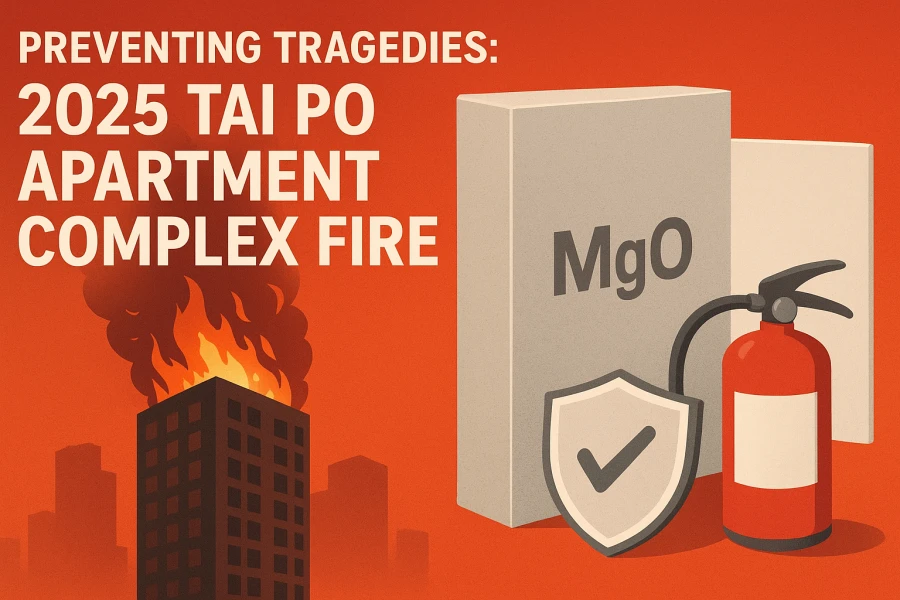
The lessons from the Tai Po Apartment fire highlight that while emergency preparedness and active fire safety measures—such as alarms, sprinklers, and evacuation drills—are critical, they are only part of the equation. Equally, if not more, important is passive fire protection, which involves the use of fire-resistant building materials and structural elements designed to slow down or prevent the spread of fire. Unfortunately, passive fire protection is often overlooked in both new constructions and renovation projects, leaving buildings and residents vulnerable.
By combining active fire safety measures (systems that respond to fire) with passive fire protection (materials and designs that resist fire), high-rise buildings can significantly reduce the risk of rapid fire spread, improve evacuation time, and protect both lives and property.
5.1 Common Fire-Resistant Materials
High-rise buildings require materials that can withstand high temperatures and prevent fire from spreading. Common fire-resistant materials include:
-
Cement Boards: Non-combustible, strong, and resistant to heat and impact.
-
Gypsum Boards: Widely used interior panels that slow fire spread and emit minimal smoke.
-
Mineral Wool Panels: Excellent thermal insulation and fire resistance, often used in walls, ceilings, and cladding.
-
Magnesium Oxide Boards (MgO Boards): Highly durable, non-combustible, low smoke emission, and suitable for exterior and interior applications.
These materials are designed to maintain structural integrity under fire conditions, minimize smoke generation, and slow down the rapid propagation of flames—core elements of effective passive fire protection in modern high-rise buildings.
5.2 Magnesium Oxide Board (MgO Board)
Among modern fire-resistant materials, magnesium oxide board (MgO board) stands out for its excellent fire safety performance:
-
Non-combustible: MgO boards do not catch fire, even under prolonged exposure to high heat.
-
Low smoke emission: Unlike some materials, MgO boards do not release toxic gases when exposed to fire.
-
Durable and stable: High temperatures do not compromise the structural stability of the board, making it suitable for exterior walls, partitions, and ceilings.
-
Versatile application: Ideal for residential high-rises, commercial buildings, and renovation projects where fire safety is critical.
5.3 Benefits of Using Fire-Resistant Materials
Using materials like MgO board can significantly reduce the risk of fire-related tragedies:
-
Slows down fire spread, giving residents more time to evacuate.
-
Protects structural elements, minimizing property damage.
-
Enhances long-term safety and compliance with building codes.
5.4 Case for High-Rise Renovation Projects
For buildings undergoing exterior renovations or maintenance, selecting fire-resistant scaffolding, nets, and wall panels is crucial. Combining proper materials with safety protocols can prevent incidents similar to the Tai Po Apartment fire, ensuring both resident safety and asset protection.
6. Practical Tips for Homeowners and Builders
6.1 Choose Fire-Resistant Materials
When building or renovating high-rise structures, prioritize fire-resistant materials for walls, partitions, ceilings, and exterior cladding. Materials such as MgO board, cement boards, and mineral wool panels can drastically reduce fire risk and help protect both residents and property.
6.2 Maintain Safe Construction Practices
During renovations or maintenance work:
-
Avoid using flammable temporary coverings like foam or plastic sheeting.
-
Ensure scaffolding and protective nets meet fire-retardant standards.
-
Strictly enforce no-smoking policies on construction sites.
-
Monitor for potential ignition sources, such as welding sparks or hot machinery.
6.3 Ensure Functional Emergency Systems
Fire alarms, sprinklers, and evacuation routes should always remain operational, even during renovation projects. Regular testing and maintenance of these systems can save lives in case of an emergency.
6.4 Conduct Safety Audits and Training
Homeowners and building managers should:
-
Conduct regular fire safety audits to check materials, fire exits, and emergency systems.
-
Educate residents on evacuation procedures and the importance of not blocking exits.
-
Provide workers with fire safety training and enforce compliance with regulations.
6.5 Engage Professional Fire Safety Advisors
Consulting with fire safety experts ensures that both construction practices and material selections meet high standards. Expert guidance is especially important for high-rise buildings, where fire spread can be rapid and evacuation is challenging.
7. How to Stay Safe During a High-Rise Fire
7.1 Stay Informed
Once a fire occurs, quickly obtain information through phones, radios, or neighbors. Knowing the fire’s location and the safest evacuation routes allows for informed decisions.
7.2 Use Safe Evacuation Routes
Always use the fire stairs instead of elevators, as elevators may fail or lose power during a fire. Familiarize yourself with all exits and stairwells to ensure quick and safe evacuation.
7.3 Close Doors and Windows
If the fire is not immediately threatening and escape routes are blocked, close doors and windows to reduce smoke infiltration. Seal door gaps and use damp cloths over the nose and mouth to minimize inhaling toxic smoke.
7.4 Stay Low to the Ground
Smoke rises quickly and is densest at higher levels. If trapped, keep low to the floor or crawl to reduce smoke inhalation and improve chances of escape.
7.5 Signal for Help
If unable to evacuate safely, signal for help using a phone, flashlight, or by tapping on windows to attract rescuers’ attention. Stay in contact with family or neighbors to maintain communication.
7.6 Follow Firefighter Instructions
When firefighters arrive, follow their guidance carefully. Avoid taking unnecessary risks that could endanger yourself or hinder rescue efforts.
7.7 Post-Fire Health and Mental Safety
After the fire, monitor for respiratory issues from smoke inhalation and seek medical attention if necessary. Fire incidents can also cause psychological stress, so consider professional counseling or community support.
8. Conclusion
8.1 Key Takeaways from the Tai Po Fire
The 2025 Tai Po Apartment Complex fire highlights the devastating consequences of fire in high-rise residential buildings. Flammable exterior materials, human errors, and gaps in regulatory oversight contributed to the rapid spread of the fire, leading to tragic loss of life and property.
8.2 The Importance of Fire Safety Measures
This incident underscores the critical need for:
-
Using fire-resistant building materials
-
Implementing proper construction and maintenance practices
-
Maintaining functional emergency systems
-
Strengthening regulatory enforcement
8.3 Magnesium Oxide Board as a Fire-Safe Solution
Among modern fire-resistant materials, magnesium oxide board (MgO board) provides exceptional fire protection. Non-combustible, durable, and low in smoke emission, MgO boards are ideal for high-rise buildings, renovations, and any project where safety cannot be compromised.
8.4 A Call to Action
Building owners, residents, and construction professionals must prioritize fire safety at every stage—from material selection to emergency preparedness. Investing in fire-resistant materials like MgO board is not just a regulatory consideration but a vital measure to protect lives and property.
👉️ To learn more about the 2025 Tai Po Apartment fire and follow the latest updates, check out the detailed Wikipedia page and BBC News coverage.
